
“People Grow by Being Supported.”~VOLUNTAINER Marked its 10th Year of Foundation – Place where People Come Together, Step Up to Challenges and their Lives Move Forward~
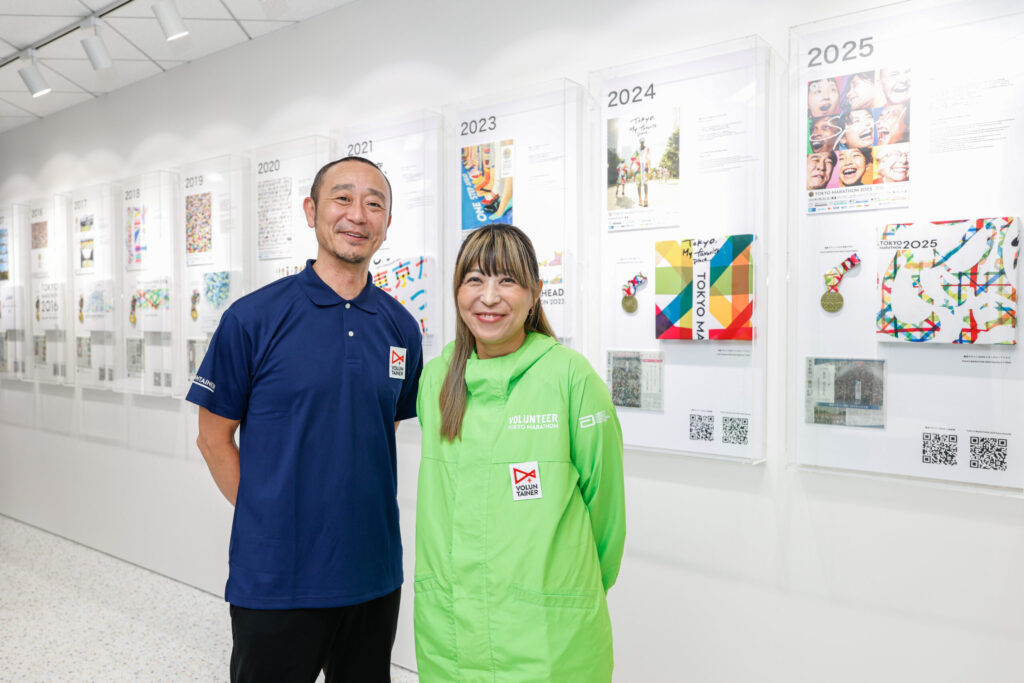
Interview Relay 3rd Run: Stories of “How the Tokyo Marathon Moved Your Life Forward”
This time, we spoke with a volunteer who has supported the event as well as an advisor who has nurtured the volunteering culture of the Tokyo Marathon.
Over the years, the Tokyo Marathon has moved the lives of both runners and volunteers forward. In 2027, the Tokyo Marathon will celebrate its milestone 20th edition.
The Tokyo Marathon Foundation official volunteer club called “VOLUNTAINER” marked its 10th year of foundation in 2026. This is not just a place to support the race: it is where each individual steps up to challenges, grows and steps forward into a new future.
Mr. [Masanori Takayama (Lupin)] as VOLUNTAINER Advisor has nurtured such culture through briefing sessions and leader training and workshops, and Ms. Risa Murakami (Risa) as Leader/Leader Support has dedicated herself to supporting volunteer operations on the ground.
What does the Tokyo Marathon look like through their eyes—as a place where people truly grow?
Why Volunteers Truly Enjoy the Tokyo Marathon
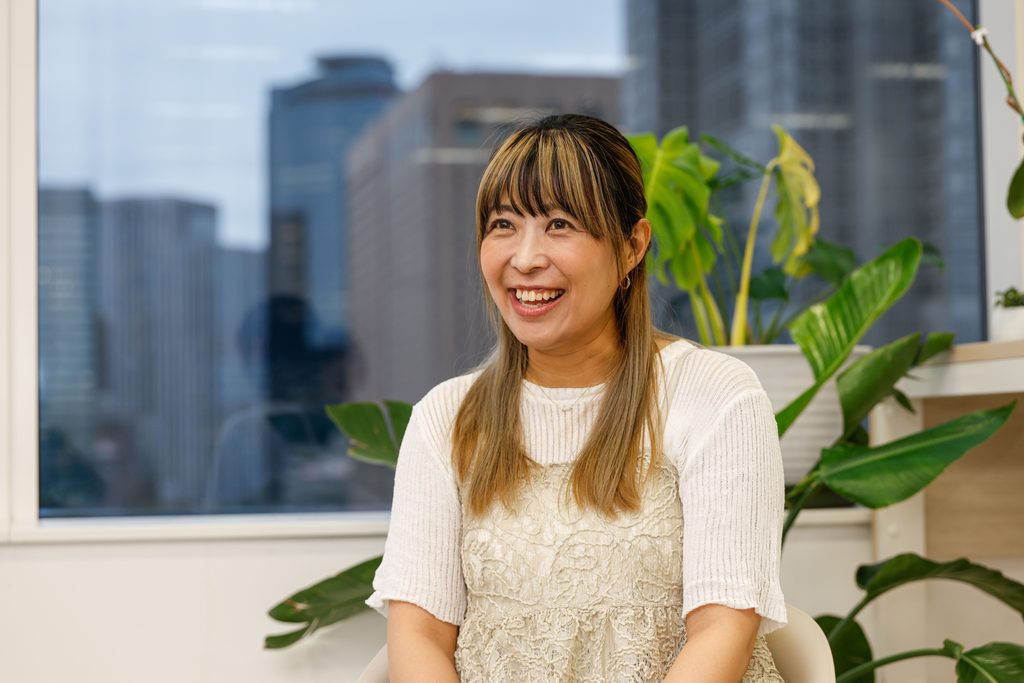
――What inspired you to start volunteering at the Tokyo Marathon?
Murakami: I signed up in 2016 when VOLUNTAINER was first established and participated in the Tokyo Marathon as a volunteer. The company I worked for at the time was a sponsor of the Tokyo Marathon, so I had always hoped to get involved with the event someday. I used to volunteer at the Osaka Marathon, so I had a long-standing desire to eventually contribute to the Tokyo Marathon someday.
Takayama: My involvement with the Tokyo Marathon dates back to 2010, when the Tokyo Marathon Foundation’s Volunteer Business Department was called “Volunteer Center.” It all started when the then-Director of the Volunteer Center approached me during a relationship camp in Urabandai, Fukushima, which was held for members of organizations supporting Philippine orphanages here in Japan, and asked if I could conduct a training seminar for sports volunteers. Since then, I have been involved not as a volunteer on race day, my role has centered on empowering and helping people grow.
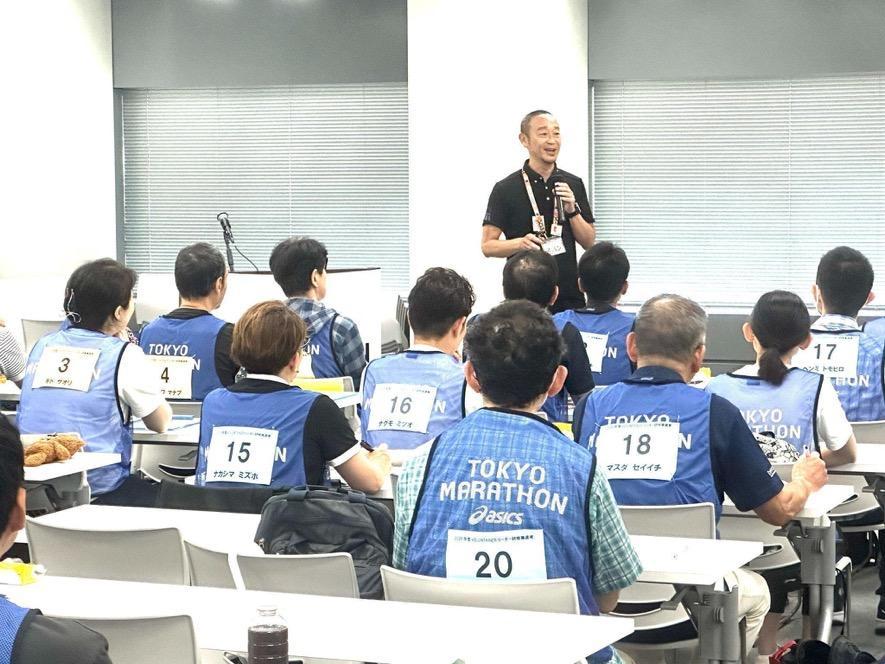
The photo shows Lupin talking about leadership and communication at the FY2026 VOLUNTAINER Leader training and selection.
――How did the Tokyo Marathon look from a volunteer’s perspective when you first took part??
Murakami: I always used to think that volunteering was just about helping people out, but I was deeply impressed by the sheer enthusiasm of so many people who possess a profound devotion to the Tokyo Marathon.
Takayama: I totally agree with you. Having watched the volunteer operations on the ground every year, it is clear that so many people are transforming their love for the Tokyo Marathon into the very energy that sustains it. It was like nothing I’d ever seen before. While the runners certainly bring immense passion, the volunteers match that enthusiasm step for step. Honestly, it feels like the volunteers have even more energy (laughs). They truly enjoy the event and the word “thriving” is the perfect way to describe it, isn’t it? And, aren’t you exactly the same, Risa?
Murakami: Yes! Absolutely!
We are Nurtured by the Connections We Share with People
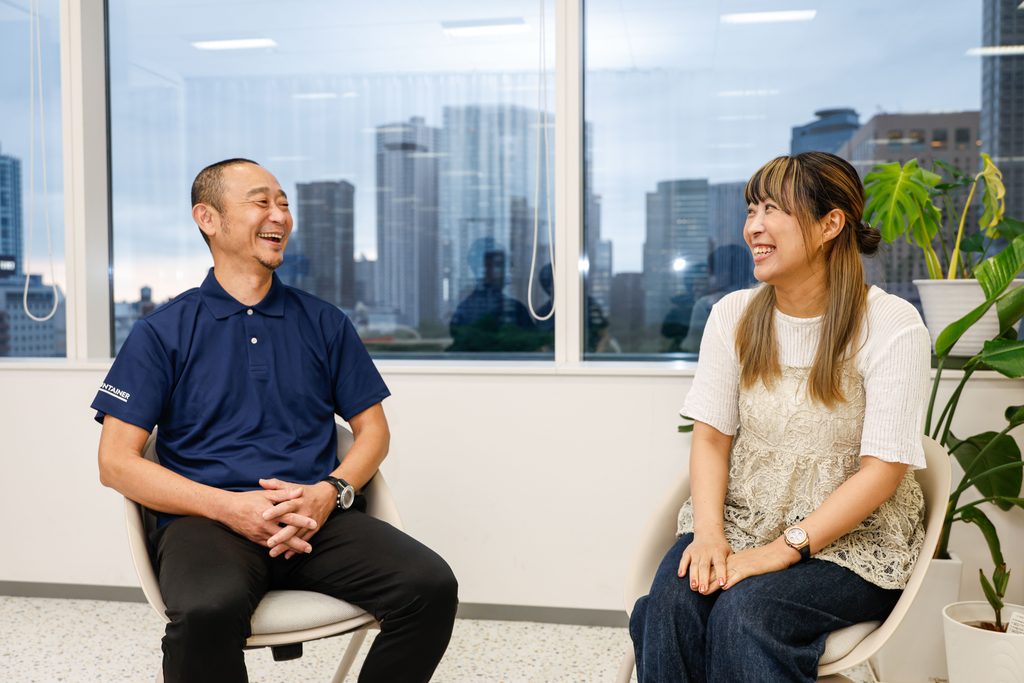
――Starting as a Volunteer Member, Ms. Murakami has advanced to the roles of Leader and Leader Support.
Murakami: Yes, I was Leader in 2019 and since 2022 I have been playing a role of Leader Support. I moved from Osaka to Tokyo in 2017, and I had an urge to take on a new challenge in a new environment. I didn’t really know anyone in Tokyo yet, so part of me was hoping to build new connections. I thought, “Why not make the most of this and step up my volunteer role, too?”
――Did those encounters and challenges bring about any changes to your daily life or work outside of the Tokyo Marathon?
Murakami: I’m still in touch through a group chat with the people I met during the Leader training. We talk about things like, “Where are you volunteering this year?” and exchange information about other running events besides the Tokyo Marathon. This year, we even signed up for the TOKYO Night Relay Fes 2026 together.
Takayama: You all went out for a meal together on the very day the training ended, didn’t you?
Murakami: Yes, we did! We really hit it off right away, and just like that, I had friends in Tokyo. We all met for the first time at the training, but the group was incredibly diverse, spanning from young people in their 20s to people in their 60s and beyond.
――As for you, Mr. Takayama, in 2010, you received a request from the Volunteer Center to help make the Tokyo Marathon “the safest and most secure race in the world.” What was going through your mind then?
Takayama: They told me they wanted to build a team where everyone could have fun volunteering together just like at races abroad. For that to happen, it wasn’t just about managing the operations – we also wanted to nurture communication and leadership.
At first, when they told me “We want you to be the instructor,” I refused, saying, “No way! That’s impossible for me.” (laughs) But then I realized that the approach to people development I cultivated through outdoor education could be applied to a volunteer setting, where you have to build a team in a very short amount of time. So I said, “Alright, let me give it a try,” that’s how it all started.
――Through the Leader and Leader Support training of VOLUNTAINER, what is the core message that you have consistently tried to convey?
Takayama: At the core of it all, it was definitely about building real human relationships. Is that coming through?
Murakami: Yes, completely. It really resonates with me. In our training, success isn’t the only definition of success. What matters more is calling out to one another and ensuring clear communication as a team.
In the Leader training I participated in, we had three group workshops, and we actually missed the goal in two of them. But in the end, I think everyone completed their Leader registration because we tackled the challenges together and kept communication alive. People who meet for the very first time in the morning can naturally communicate and work together just a few hours later. I feel that this ability is an incredibly important skill.
Takayama: I’m glad to hear that. It seems my message is really getting across (laughs). We call it training, but it is actually a gathering to welcome as many new fellow Leaders as possible.
A Small Step Moved Lives Forward
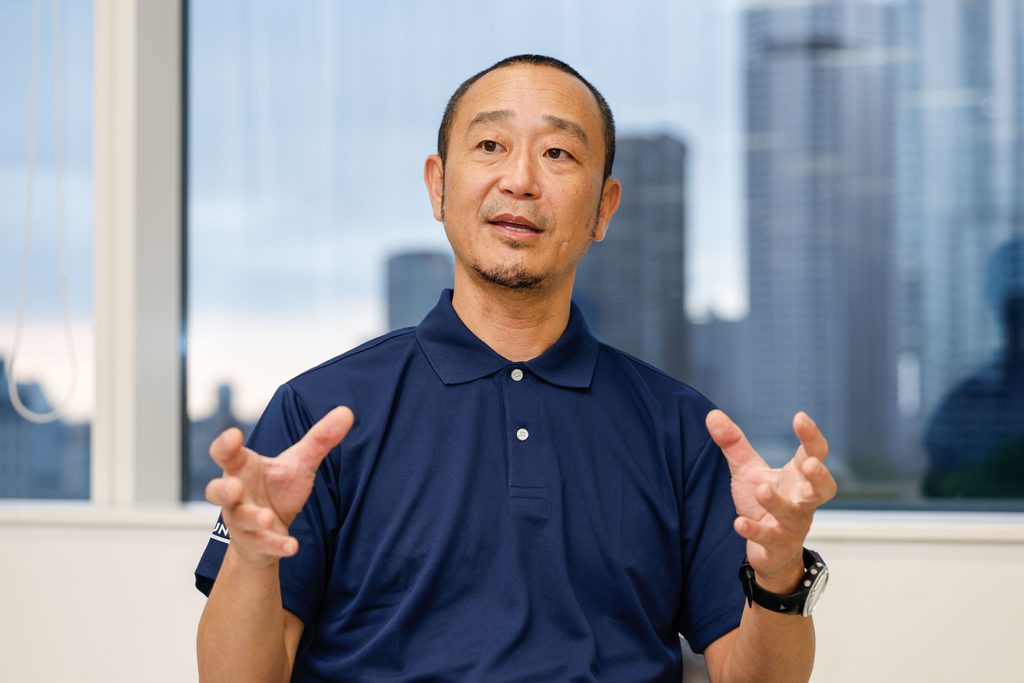
――VOLUNTAINER marked its 10th year of foundation. Over the decade, in what ways do you feel that VOLUNTAINER has evolved and grown?
Takayama: I believe our volunteers gather out of a genuine passion, seeking to fulfill a sense of actualization through their participation. I always hoped for a club-like space where “you matter, and I matter too.” It was right then that VOLUNTAINER was founded.
And the name itself is just brilliant – a blend of volunteer and entertainer. I was so excited when the organization started with the vision of “Fun for you, fun for me.”
Looking back over the past decade, what began as scattered dots connected into lines, which then expanded into a broad network. As the years went by, everyone’s shared passions layered together, transforming us into a multi-dimensional, deep and resilient organization.
Murakami: Over the past decade, I’ve felt a real sense of belonging grow within me. The more I volunteer, the more I fall in love with the Tokyo Marathon, and the more friends I make who share that same passion. I believe that is the true magic of VOLUNTAINER.
Takayama: When VOLUNTAINER becomes a place you can call home, people can venture out and take on challenges anywhere else. – I hope VOLUNTAINER can become that kind of presence.
Murakami: Honestly, though at first, I registered myself with VOLUNTAINER just because I had to do so in order to volunteer at the Tokyo Marathon. But now, I feel that it is also a place for me to step up through activities like lifesaving and barrier-free training. We gain so much knowledge that goes beyond volunteering and enriches our daily lives.
Takayama: It helps us build skills that are incredibly useful even outside of volunteering. We also had training sessions for sign language. Personally, ever since I got involved with VOLUNTAINER, I’ve noticed people striking up conversations with me in town so much more often (laughs). It has truly expanded my connections and enriched my own life through the Tokyo Marathon.
――Do you feel that the Tokyo Marathon moves the lives of not just its runners, but its “supporters” —like its volunteers—forward as well?
Murakami: From this perspective, I feel that my life has moved forward. The biggest change the Tokyo Marathon brought to my life wasn’t just expanding my circle of people, but discovering the true joy of taking on new challenges. Every single step forward brought new encounters and lessons, teaching me to simply say, “Let’s give it a try.” Embracing that mindset is exactly what has shaped who I am today. If I had only participated as a regular Member, I might never have met this incredible group of peers who became such close friends.
Takayama: Yeah, I agree. It’s not about some dramatic, sudden change. It is beautiful precisely because it’s a natural extension of our daily lives. By stopping by as if adding a single new point to your daily routine, you can encounter new perspectives and take another positive step forward. To me, I truly believe that VOLUNTAINER is exactly that kind of place.
Murakami: Stepping out of my comfort zone can definitely make me feel nervous at first. But, I sincerely believe that taking that single step is exactly what brought me to where I am today.
“You and I are Both Main Characters” – This is our Style of Leadership
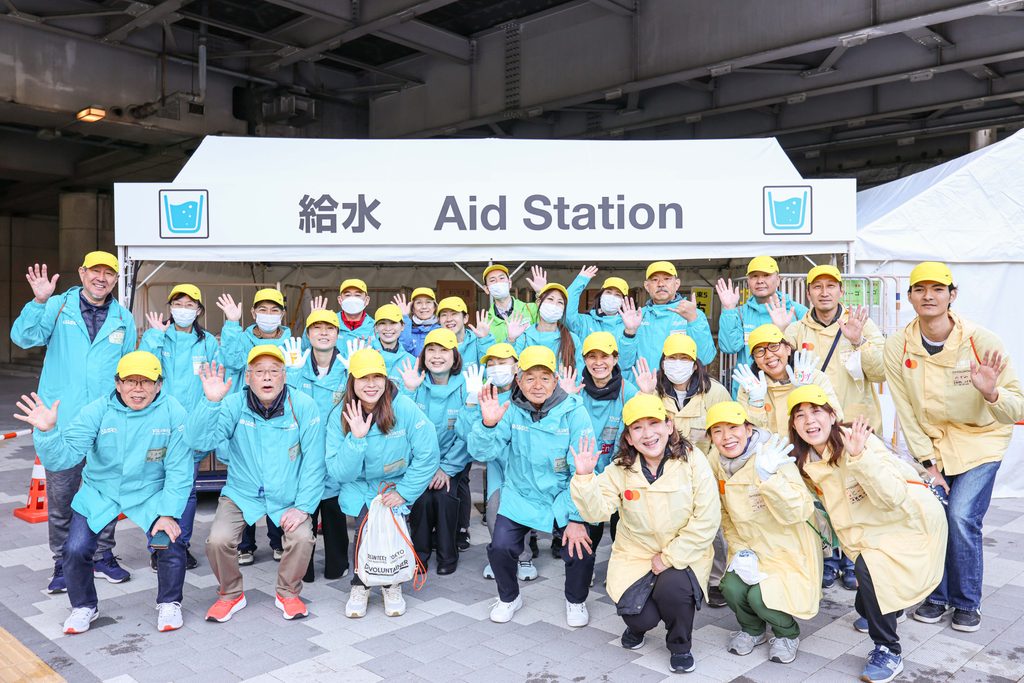
――Mr. Takayama mentioned earlier that “volunteering is something that fulfills our sense of self-actualization.” For those seeking self-actualization, what kind of place is an organization like VOLUNTAINER?
Takayama: When you are achieving self-actualization, you are in a truly happy state of mind. For instance, if the demand is too overwhelming, people feel anxious and just want to walk away. On the other hand, if it’s too easy, we feel bored. In other words, when your skills and the level of challenge are perfectly balanced, you feel the greatest joy and become fully immersed in the activity. In psychology, this is called the “flow state.”
I truly believe that reaching this flow state at VOLUNTAINER is the ultimate ideal. I believe that our system – where you can choose your own role and step up from Member to Leader, and then Leader Support – exists precisely for this reason. The true charm of VOLUNTAINER lies in the fact that you aren’t forced by anyone; you get to choose your own level of challenge.
I truly, deeply believe that volunteering has the power to save our planet-which means saving the people on it. This might sound like an exaggeration, but volunteering truly has that much power to value and care for people. It is exactly because of this incredible charm that I have stayed involved with VOLUNTAINER for all these years. VOLUNTAINER is like a fan club, don’t you think?
Murakami: I totally think so too. It’s amazing how the Tokyo Marathon attracts so many people who want to be a part of it and support it just out of love! While many events struggle with a shortage of volunteers, the Tokyo Marathon is so rare because people actually get rejected through a lottery even though they really want to join.
Takayama: When I tell people you can actually get rejected for a volunteer role, they always go, “What? Really?” That culture in itself is remarkable.
Murakami: I could understand if it were the Olympics or the World Athletics Championships, which are rare, once-in-a-lifetime events for a city. But the Tokyo Marathon happens every single year. But for an event that happens every year, having people miss out on the lottery just proves how magnetic it is and how much people wish to be a part of it. It is indeed like a fan club.
――Is it precisely because of what VOLUNTAINER is that our ideal image of a Leader becomes clear?
Takayama: While many can operate in a flow state, if a Leader focuses solely on team results and task completion, it causes some Members to emotionally distance themselves. That is exactly why I have always focused on building relationships as my core pillar. To put it extremely, I believe that is really all that matters.
An ideal leader is someone who can join hands with others and says, “You and I are both the main characters here.” A leader isn’t someone who stands at the front waving a flag, but someone who links arms with everyone and says, “Let’s enjoy this together.” To me, that’s what makes a true VOLUNTAINER leader.
Murakami: It’s so important to build a place where we can motivate each other. It’s not just about keeping your own motivation up; creating an environment where others feel like giving it a try is just as important. That’s why Leaders’ power to connect people is essential.
Takayama: Leaders need to look out for every single Member and always be there for them. That alone is hard enough. Because of that, I really want each team to be a place where people feel comfortable taking on new challenges. I want to keep building platforms that help Leaders grow, so they can use their words to give someone that gentle push forward.
Also, I’m sure some people in Leader Support don’t just want to help with operations—they genuinely want to raise Leaders. From now on, I want to put more energy into training these “mentors of mentors.” If they grow so much that I eventually become obsolete, that would honestly make me happier than anything.
The 20th Anniversary: And Beyond
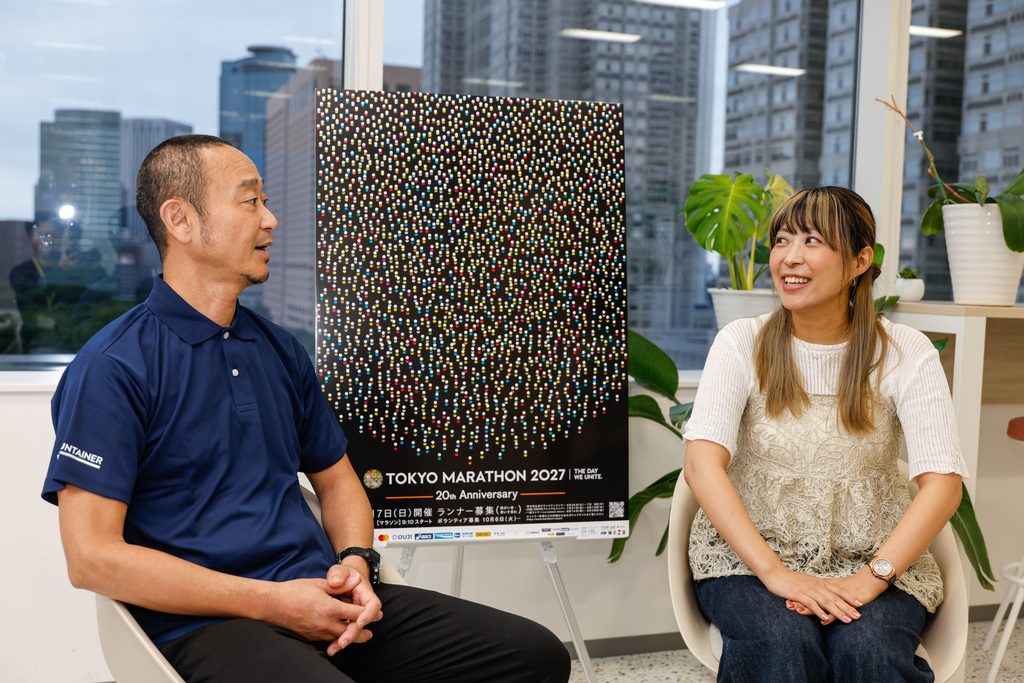
――In anticipation of the Tokyo Marathon 2027 volunteer recruitment in October, please give a message to those who want to join VOLUNTAINER and to take on the challenge of becoming Leaders or Leader Support.
Murakami: It’s completely normal to feel anxious when volunteering for the first time. But if you have even one thing that makes you feel secure, it gets so much easier to take the leap. For example, applying together with a friend is a great way to start. Learning how to set up a supportive environment for your own challenges is something you can definitely use in your work, too.
Volunteering isn’t just about helping someone else—it’s a place where you can grow as a person. That’s why I want to encourage people by saying, “Why not give volunteering a try to make your life even better?”
Takayama: Full disclosure: I’ve actually never done the Tokyo Marathon volunteering myself. I figured knowing almost everyone there would just make me super nervous! (laughs) But after listening to Risa, I realized it’s time for me to take the leap, too.
Murakami: Then, let’s take on the challenge at the 20th anniversary event!
Takayama: If you feel like trying something new or think that volunteering sounds like fun, we would love for you to join us. The volunteer recruitment for the Tokyo Marathon 2027 starts in October. If you have even a spark of interest, we would be absolutely thrilled to see you take that first step.
And when thinking about the next ten years, I really want the younger generation to get involved. Meeting people from all walks of life and building connections before entering the working world is bound to be a priceless experience. I believe that taking these small steps together will build the future of VOLUNTAINER and shape the future of the Tokyo Marathon.
――Looking ahead to the next ten years, we want the event to keep being a place where people can grow and build lasting connections. With that in mind, what kind of future do you hope to see for VOLUNTAINER?
Murakami: Everyone has their own circumstances, so I know there are years when people just can’t make it. But as a member of this “fan club,” I really want it to be a place where they can always come back to. I hope we continue to be an organization where people feel completely safe returning.
Takayama: I completely agree. I want VOLUNTAINER to always be a place where people truly feel they belong. And as someone who helps build that space, I want to create an environment that makes it easy to take that first step, rather than building walls or setting up hurdles.
A place where you can find rich connections, learn lifelong lessons, and leave with a slightly more positive mindset. That’s the kind of place I hope we always continue to be.
――Finally, please give a message ahead of the Tokyo Marathon 2027, which will be the historic 20th anniversary event.
Takayama: I believe that I, too, am just one piece of the puzzle that makes the Tokyo Marathon what it is. I want to be someone who can give strength—even if just a little—to everyone I meet at the 2027 event. With that in mind, I look forward to working closely with each individual over the coming year.
Murakami: For me, the absolute best part of these past ten years has been the incredible number of connections I’ve made. That’s why, for the 20th anniversary and beyond, I want to keep expanding my own circle of connections while enjoying the Tokyo Marathon with as many people as possible.
Takayama: The 20th anniversary is definitely a big milestone, but it’s not the goal. It’s a new starting line for the future. I look forward to seeing this event inspire new connections and challenges, and watching that circle ripple out into the future.

-

TCS New York City Marathon® RD Ted Metellus World Marathon Voices A Global Perspective on the Tokyo Marathon
MORE -

Creating the Day We “Run Through the Heart of Tokyo” — Bringing the Tokyo Marathon to Life with the Tokyo Metropolitan Police Department —
MORE -
World Marathon Voices A Global Perspective on the Tokyo Marathon The Bank of America Chicago Marathon Race Director Carey Pinkowski
MORE -

20 Milestones of Connection between the Neighborhood and Its People – Tokyo Marathon Seen from Ginza
MORE -
Supporting Neighborhoods Edition Connecting Runners and the City: 20 Editions of the Tokyo Marathon Seen from Nihonbashi
MORE