Creating the Day We “Run Through the Heart of Tokyo” — Bringing the Tokyo Marathon to Life with the Tokyo Metropolitan Police Department —
Interview Relay 3rd Run: Stories of “How the Tokyo Marathon Moved Your Life Forward.” In this “Supporters Edition,” we shine the spotlight on the Tokyo Metropolitan Police Department (TMPD), which safeguards the event through comprehensive traffic management.
Running through the very heart of Tokyo is an experience unique to the Tokyo Marathon. In creating the stage for this day, the TMPD is indispensable. They play a vital role in balancing the city’s everyday life with the race—always mindful not only of runners and volunteers, but also of cheering spectators, local residents, and regular traffic.
What took place behind the scenes of traffic control during the major course revision in 2017? What experiences and dedication have been passed down to today? And how do those who protect and support the race view this single day—one that might move someone’s life forward?
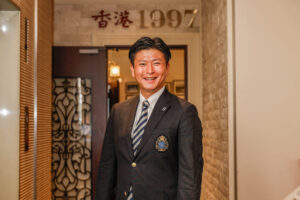
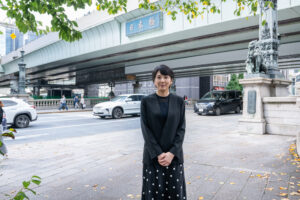
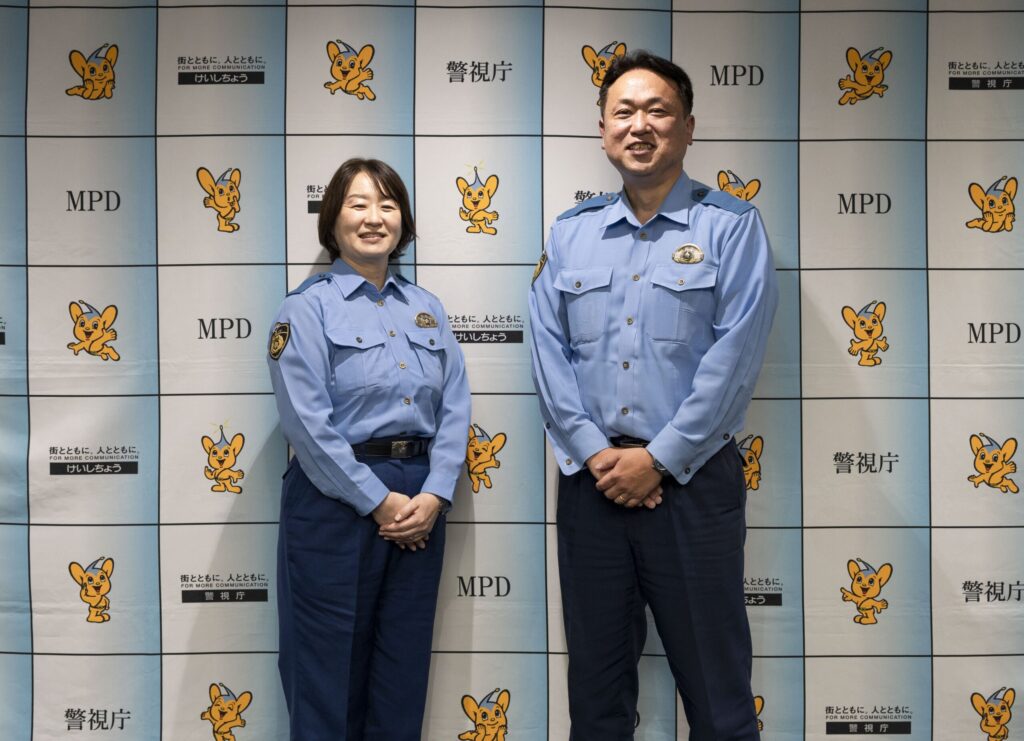
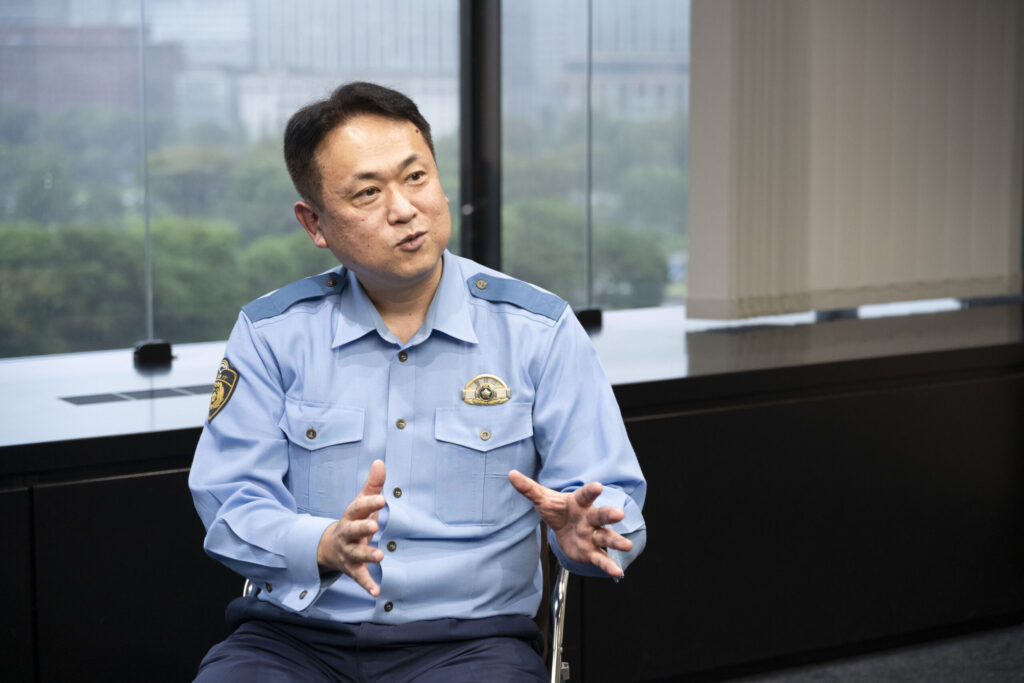
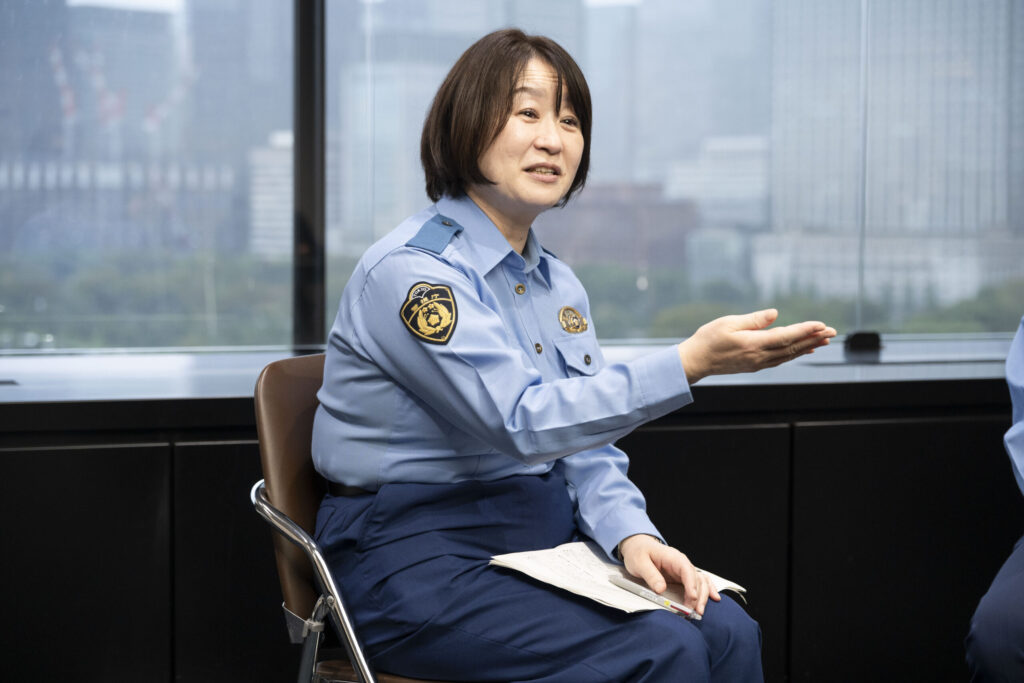
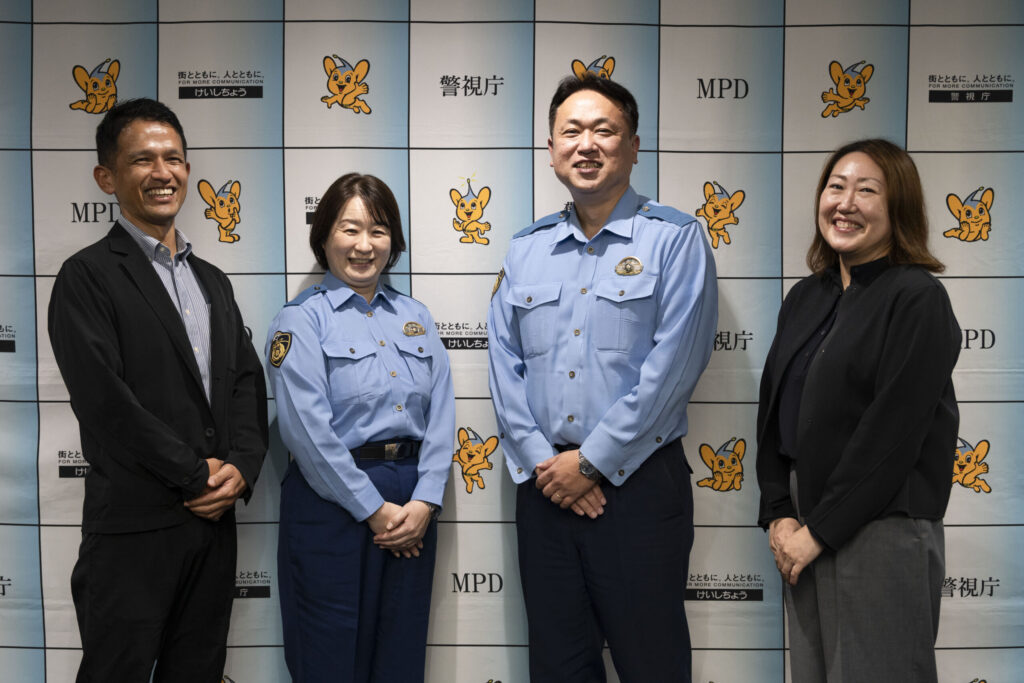
We spoke with Officer Daiki Yamada, who managed traffic control during the 2017 course change, and Officer Shino Ogata, who currently oversees the Tokyo Marathon within the Traffic Control Division.
Protecting Safety and Smooth Traffic for Everyone: From Runners to Everyday Citizens
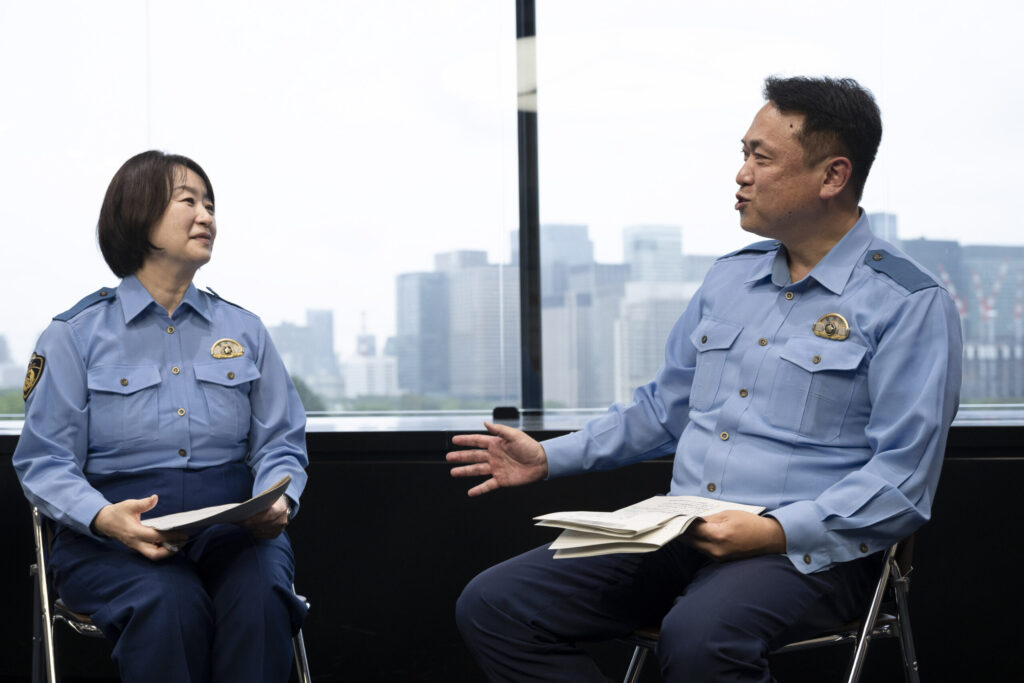
— To start, could you tell us about your roles and how you have been involved with the Tokyo Marathon?
Yamada: Starting in 2016, I served as a supervisor in Road Section 2 of the Traffic Control Division, which oversees major events, managing traffic control for the Tokyo Marathon through 2019.
Ogata: I joined the Traffic Control Division in 2023. Like Officer Yamada, I oversee traffic control for major sporting events, including the Tokyo Marathon, the Tokyo Legacy Half Marathon, and the Hakone Ekiden relay.
— What is most crucial when managing traffic control for the Tokyo Marathon?
Yamada: Above all, our primary mission is preventing accidents among participants while maintaining safe, smooth traffic flow in the areas surrounding the course.
Ogata: Even while the race is underway, everyday life continues across the city. Ensuring safe, seamless mobility not only for the runners but also for those going about their daily routines is our highest priority.
— How do preparations for traffic control unfold leading up to race day?
Yamada: Back when I was in charge, we didn’t formally set up the dedicated project team until toward the end of the year. Even so, discussions with the Tokyo Marathon Foundation began almost right after that year’s race had wrapped up.
Ogata: Nowadays, as soon as the Tokyo Legacy Half Marathon wraps up in October, we launch the Tokyo Marathon project team and collaborate closely with the Tokyo Marathon Foundation. With events like the Tokyo Legacy Half Marathon and the Hakone Ekiden relay on our calendar, traffic control for major events is genuinely a year-round commitment.
— What makes traffic control for the Tokyo Marathon uniquely challenging?
Yamada: We have to manage traffic restrictions across wide areas for hours on roads normally filled with cars, while shifting those closures as the race progresses. It takes a lot of effort, but it is truly rewarding work.
Ogata: Local police stations typically focus on traffic management within their individual precincts, so opportunities to execute an operation on this scale are exceptionally rare. It is an experience made possible only by being part of this specialized unit.
No One Must Ever Be Put in Harm’s Way
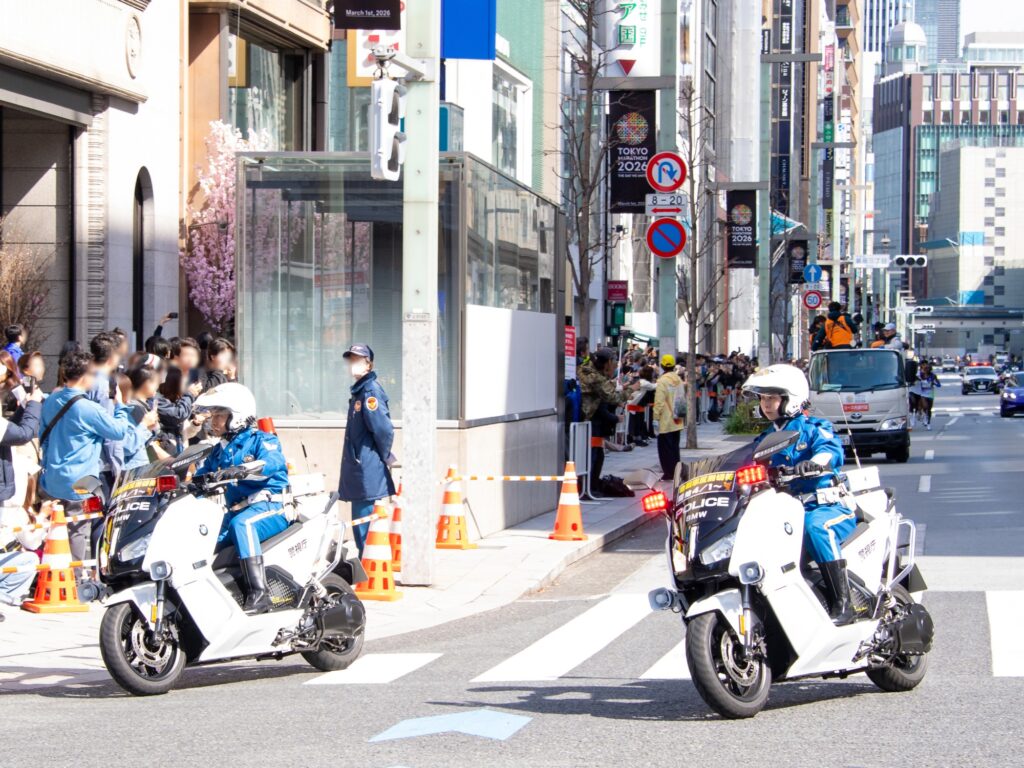
— Seeing so many runners fill the heart of Tokyo, which is usually busy with traffic—how does that sight feel from your perspective in traffic control?
Yamada: Back when I handled the Tokyo Marathon in the Traffic Control Division, I carried out my duties on race day while watching the large monitors. Later, after transferring to Ueno Police Station along the course, I got to experience the runners and cheering spectators up close right on the ground—and I was deeply moved. Feeling that energy firsthand on the streets was completely different from seeing it through screens; it was simply overwhelming. Watching all those people pour their hearts into the challenge really makes you want to take on something new yourself and run the Tokyo Marathon too, doesn’t it?
Ogata: Officer Yamada, I heard that! We might just spot you on those big monitors during next year’s race! (laughs)
Yamada: You bet! I’ll give everyone an inspiring run to remember!
Ogata: Right now, just as Officer Yamada described, I’m in the role of watching those big monitors. All I can focus on is making sure the closures are set up properly before the start, and cleared away smoothly after the finish. The whole day goes by with just those thoughts, so honestly, I don’t have the time to take in the moment during the race. It’s only after everything finishes safely that I can finally relax.
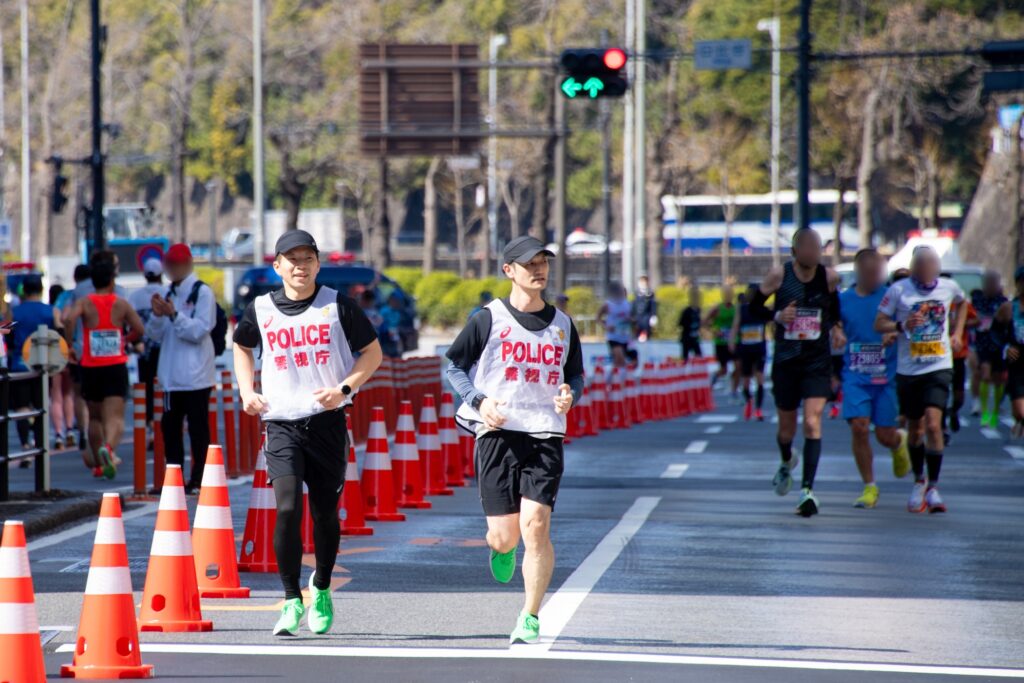
— For the runners, these 42.195 km will be the memory of a lifetime. How do you feel about creating a road where they can run, and seeing them on their way safely?
Ogata: Staging the Tokyo Marathon must never, under any circumstances, put anyone in harm’s way. To ensure that, generations of our predecessors poured tremendous thought into shaping the course and building our traffic management frameworks. Yet unexpected hurdles arise every year right up until the starting gun sounds. Through it all, everyone stays true to their role, bound by a shared commitment to deliver a safe race.
Even a single accident could jeopardize the event’s continuation. That is why no single safeguard is enough—true safety requires a comprehensive shield built from every conceivable angle.
Yamada: Safety is never something we achieve through police efforts alone. Many perspectives shape this day—runners, everyday drivers, spectators cheering curbside, and neighborhood residents. That’s why we continually encourage the Tokyo Marathon Foundation to design safety protocols seen through each of those individual eyes. I consider that empathy absolutely essential.
Whenever we present a difficult hurdle and ask the Tokyo Marathon Foundation team, “How can we overcome this challenge together?” they thoroughly investigate and return with safety measures elevated to an even higher standard. The steady accumulation of that mutual trust and dialogue truly protects this race.
Behind the Scenes of the 2017 Course Change: The Challenges of Traffic Control
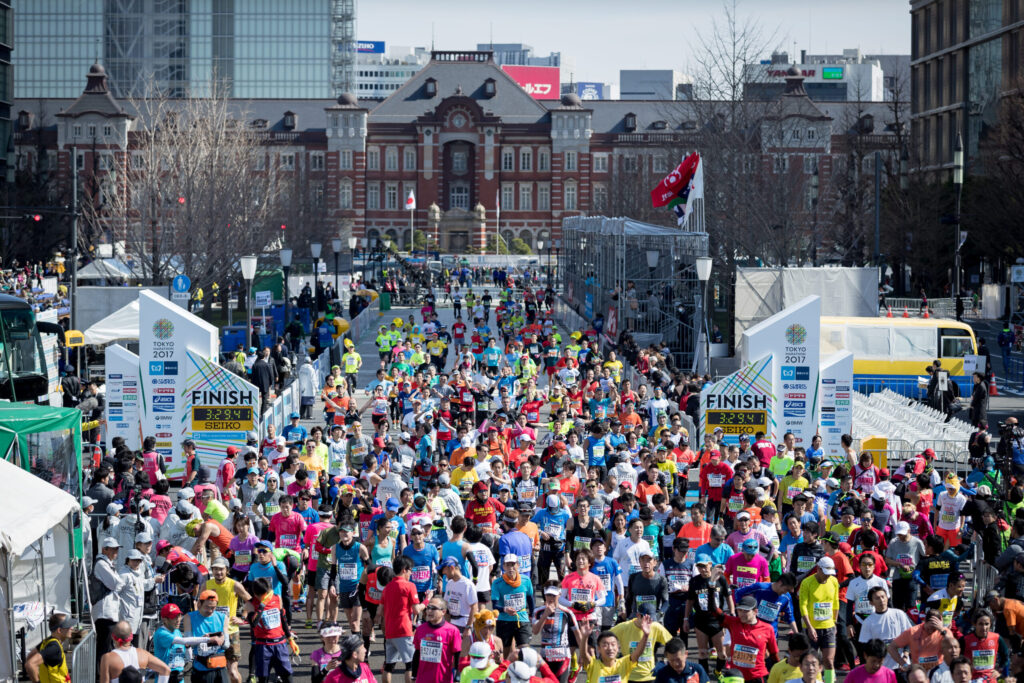
— When you first learned about the course change for the 2017 event, how did you react from your perspective in traffic control?
Yamada: I remember I asked, “Wait, what?” about five times back-to-back! (laughs) Joking aside, a complete overhaul of the course meant rethinking our entire traffic management strategy from scratch. While portions of the first half overlapped with the existing route, my honest initial reaction was, “Can we actually pull this off?”
There was also immense pressure. We were shouldering a 10-year legacy built since the inaugural race in 2007, and we had to guarantee that same uncompromising standard of safety on an entirely new stage.
— Specifically, with the finish line moving to Gyoko-dori in front of Tokyo Station, what distinct challenges emerged, and how did you overcome them?
Yamada: The previous finish area was at Tokyo Big Sight, but the new course meant shutting down central Tokyo’s primary thoroughfares for an extended period.
Around Tokyo Big Sight, we could easily guide runners toward the waterfront where vehicular traffic was relatively light. With the new course, however, we had to figure out how to keep runners moving safely around Hibiya Crossing, Hibiya Park, and Tokyo Station. We kept asking ourselves, “Where do tens of thousands of finishers actually disperse after crossing the line?” It was a monumental logistical puzzle.
That was where the police staff of Road Section 2—our dedicated traffic control specialists—stepped up. They walked every inch of the route, surveying intersections and modeling vehicle restrictions step by step. Based on the comprehensive data and plans they compiled, the Tokyo Marathon Foundation worked through countless discussions with us. That collective effort forged the blueprint for the traffic control framework we still use today.
— How did you feel when the 2017 event—the very first under the new course—concluded safely?
Yamada: On race day, the tension was beyond words. Even after everything ended without incident, I was nowhere near relaxed enough to joke around and say, “All right, let’s celebrate with a drink!”
Ogata: I completely understand. Even now, once race day wraps up safely, I feel utterly drained in the best possible way. Knowing how much grit and dedication Officer Yamada and the Tokyo Marathon Foundation poured into building that foundation makes me truly grateful that our team carries that torch today.
We want to honor what our predecessors created and continue evolving it, step by step, year after year.
An Unwavering Commitment: Passing the Baton of “Safety and Smooth Mobility” Across Generations
— Looking back at the 2017 race compared to today, what changes or shifts do you notice?
Yamada: I feel the standards expected of us for safety and smooth traffic flow are rising every year.
Ogata: That is very true. Protocols that were considered fully acceptable in the past may no longer be sufficient today.
Yamada: For instance, whenever terrorist incidents or crowd-crush tragedies occur domestically or abroad, the public naturally worries and asks the Tokyo Marathon Foundation, “Is the Tokyo Marathon truly safe?” As these social realities evolve, the scope of proactive measures we must take expands year after year.
— Amidst these changing dynamics, how have the hard-earned experience and core mindset of past editions been handed down?
Yamada: While we pass down vast archives of records and planning documents, there is no single checklist—no magic formula—that guarantees complete success. Rather than rigid procedures, what we have truly inherited from one generation of officers to the next is our fundamental philosophy toward the work.
My senior officers constantly drummed into me: “Always dedicate your full focus to the smooth operation and absolute safety of the event.” That foundational guidance remains unchanged today.
Ogata: Absolutely. Even as the bar continues to rise, our foundational philosophy never wavers. Working in concert with emergency medical services and fire departments, our mission directly protects human lives. Whether it was the 10th edition or the upcoming 20th anniversary milestone, that commitment remains absolute and unshakable.
Holding that mindset close to our hearts, we continually strive to elevate and refine what we do.
What Makes the Tokyo Marathon Special—and the Pride in the Work Behind It — The Perspective of Those Who Support the Race —
— For many runners, running the Tokyo Marathon becomes a life-changing experience. How does it feel to safeguard such a momentous day for each and every participant?
Ogata: On race day, it’s not just the police staff; so many people, including private security and volunteers, come together to support the runners. This event truly comes to life only through the collective energy and dedication of everyone involved. We at the Tokyo Metropolitan Police Department simply consider ourselves one proud part of that larger team.
— Looking back on your time working on the marathon, what moments or memories stand out most vividly?
Yamada: What stands out most to me is how the awareness and operational skills of volunteers have grown stronger year after year. That shared dedication directly helps us reopen the streets earlier than scheduled.
Back when I was in charge, our post-race debriefs often went: “Did you finish clearing the road on schedule?” “No, we couldn’t.” “Why?” But with each passing edition, the coordination improved. Eventually, that dialogue shifted to “We finished well ahead of our target time!” Watching that incredible evolution firsthand left a truly lasting impression on me.
Ogata: There are actually so many people across our police staff who want to run the Tokyo Marathon themselves! But once you are assigned to a division tied to the event, race day is a working day—you can’t even enter the runner lottery.
I remember one police staff who was utterly heartbroken about missing out, and I thought, “Wait, you wanted to run that badly?!” (laughs) Stepping into this role made me realize all over again just how magnetic this race is, and how deeply people yearn to run these streets.
— For both of you personally, were there defining moments or personal growth that emerged from your involvement with the Tokyo Marathon?
Yamada: After managing traffic control for the Tokyo Marathon and later transferring to a different police precinct, colleagues would say, “He handled the Tokyo Marathon, so we can trust him with anything.”
I didn’t fully realize it while I was in the thick of it in the Traffic Control Division, but that experience earned me immense trust from my peers, and it became a tremendous source of personal confidence.
Ogata: There are hundreds of thousands of police officers across Japan, but opportunities to be involved in an event like the Tokyo Marathon are rare. I feel truly fortunate to have this valuable experience.
When someone asks me what kind of work I’ve done as a police officer with the Tokyo Metropolitan Police Department, being able to proudly say, “I’ve worked on the Tokyo Marathon,” brings me great joy.
It may not be as high-profile as working as a detective, but I take great pride in working alongside the Tokyo Marathon Foundation to make this event happen. It’s an incredibly rewarding experience.
Making It an Unforgettable Day for Everyone
— In 2027, the Tokyo Marathon will celebrate its milestone 20th edition. What do you consider essential to ensure the race continues to be held safely on the streets of Tokyo in the years ahead?
Yamada: Having zero accidents throughout the event is, of course, the absolute baseline. Even on the same route, road conditions evolve over time, so we must continuously adapt our planning to the prevailing traffic flow.
At the same time, the course must remain genuinely appealing to runners. Safety, smooth mobility, and appeal for the runners—as long as these three elements are in place, I believe the Tokyo Marathon can continue for decades to come.
— Could you share a message for the runners taking part in the Tokyo Marathon 2027, the spectators cheering along the streets, and the local community members cooperating with traffic restrictions?
Yamada: I truly hope the Tokyo Marathon 2027 becomes an unforgettable memory for everyone who takes part in this day.
Ogata: Through our work in traffic control, we hope to support from behind the scenes so that everyone can spend that day safely.
— Lastly, what does the Tokyo Marathon mean to each of you personally?
Yamada: It brought me meaningful connections with so many people, starting with the team at the Tokyo Marathon Foundation. It helped me grow significantly, both as an officer and as an individual. I truly feel it has helped shape who I am today.
Ogata: It showed me the sheer scale of traffic management required and made me realize just how many people dedicate their quiet efforts before runners can take a single step. For me, the Tokyo Marathon is an event that opened my eyes to a world I had never known before.

-

TCS New York City Marathon® RD Ted Metellus World Marathon Voices A Global Perspective on the Tokyo Marathon
MORE -
World Marathon Voices A Global Perspective on the Tokyo Marathon The Bank of America Chicago Marathon Race Director Carey Pinkowski
MORE -

20 Milestones of Connection between the Neighborhood and Its People – Tokyo Marathon Seen from Ginza
MORE -
Supporting Neighborhoods Edition Connecting Runners and the City: 20 Editions of the Tokyo Marathon Seen from Nihonbashi
MORE -
World Marathon Voices A Global Perspective on the Tokyo Marathon The TCS Sydney Marathon Race Director Wayne Larden
MORE