“The Legacy of the Tokyo Marathon” — The Race Director’s Baton Connecting 20th Editions —
The Tokyo Marathon has evolved over nearly two decades since its inaugural edition in 2007. This journey represents more than just the history of a race; it is an accumulation of passion and dedication, passed down from one person to another.
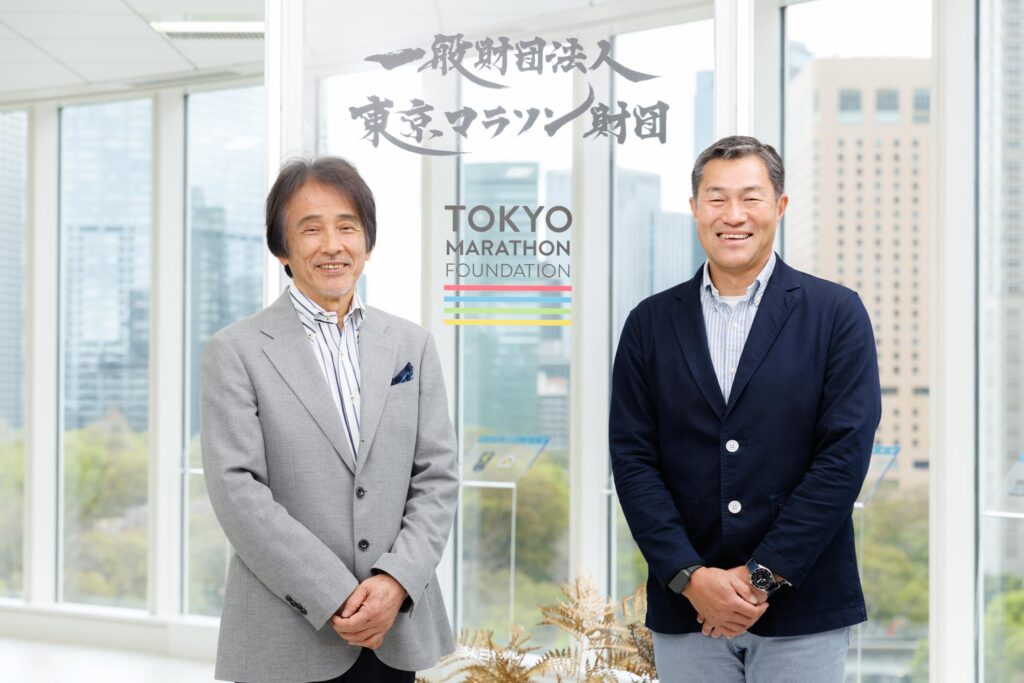
One symbol of this legacy is the role of Race Director—a figure who embodies the core values of the event and carries it into the next era. From Tadaaki Hayano, Chairman and CEO of the Tokyo Marathon Foundation, to current Race Director Yasuhiro Oshima—what exactly was entrusted along with this baton, and how has it been handed down?
As we approach the milestone 20th anniversary event, we kick off the 3rd Run of the Interview Relay under the theme of “How the Tokyo Marathon Moved Your Life Forward.” In this first installment, we retrace defining moments throughout the event’s nearly two-decade history —highlighting how people and the race itself were set in motion, and exploring how this shared passion has been carried forward to the next generation.
The Tokyo Marathon has Undergone its Own Unique Evolution
— First of all, what was the original purpose behind creating the Tokyo Marathon?
Hayano: While Tokyo already had mass-participation races like the OHME 30 & 10Km ROAD RACE, it lacked a flagship marathon that truly represented a major metropolis on the scale of the TCS New York City Marathon or the TCS London Marathon. The inception of the Tokyo Marathon stemmed from an initiative by then-Tokyo Governor Shintaro Ishihara, who envisioned creating a world-class event right here in Tokyo.
However, since no one had prior experience managing a marathon with 30,000 runners, we were essentially navigating uncharted waters, struggling immensely to align the direction across the entire organization. The organizing committee—established by the Japan Association of Athletics Federations (JAAF), the Tokyo Metropolitan Government, and an advertising agency—went through a continuous process of trial and error. We visited the various races that now make up the Abbott World Marathon Majors (AbbottWMM), adopting their best practices, which eventually led to the establishment of the Tokyo Marathon Foundation in 2010.
At the time, I served as Secretary General and later as Race Director, constantly pondering the kind of race we needed to build. What defines a global standard race? What does a mass participation marathon look like? What constitutes an elite race? And how should it function as an Olympic trial for Japan? By integrating all these diverse elements, I believe the Tokyo Marathon is an event that has achieved its own unique evolution.
— What is the role of Race Director at the Tokyo Marathon?
Hayano: Fundamentally, Race Director is the architect of the race. While I have now handed the baton over to Mr. Oshima, Race Director is the person ultimately responsible for the Tokyo Marathon as a whole. It is a role that carries full oversight of the entire event—encompassing not only the elite race, but also the general division.
— What philosophy or core values have you cherished during your time as Race Director?
Hayano: Traditionally, marathon races in Japan served primarily as trials to select national representatives for the Olympics and World Athletics Championships, placing elite athletes at the center. In contrast, the Tokyo Marathon aspired to follow the model of the TCS New York City Marathon and the TCS London Marathon—events that boast a broad, inclusive foundation while simultaneously reaching the absolute pinnacle of elite competition.
When the Tokyo Marathon first began, the winning times were in the 2:09 range. Back then, some argued that while it was a fantastic mass-participation event, it fell a bit short as an elite race. To make Tokyo a destination event chosen by the world’s top athletes, we put immense effort into marketing and building strong partnerships. As a result, the event has grown into a world-class race with winning times now pushing into the 2:01 range.
At the same time, our commitment to general runners has never changed. We want a race that honors each runner’s personal story, making them feel, “I can’t wait to run this again.” That vision remains unchanged. We will continue striving to be a marathon that seamlessly combines broad inclusivity with world-class performance.
— So that sentiment is what gave birth to the tagline, “The Day We Unite.”
Hayano: After the inaugural edition in 2007, some people remarked that the event’s overall concept was a bit difficult to grasp. So, determined to craft a concept that truly captured the essence of the Tokyo Marathon, I watched footage of the race over and over again. As I observed everyone involved—not just the runners, but the spectators cheering along the streets, the volunteers, and the operational staff—a thought naturally struck me: “Ah, this truly is ‘The Day We Unite.'”
Every single person has their own race and their own story. Yet, when you take a step back and look at the event as a whole, the entire city of Tokyo comes together as one. As a phrase that encompasses everything this event stands for, I believe “The Day We Unite.” will remain our timeless, unwavering concept.
What will be Passed Down through the Tokyo Marathon
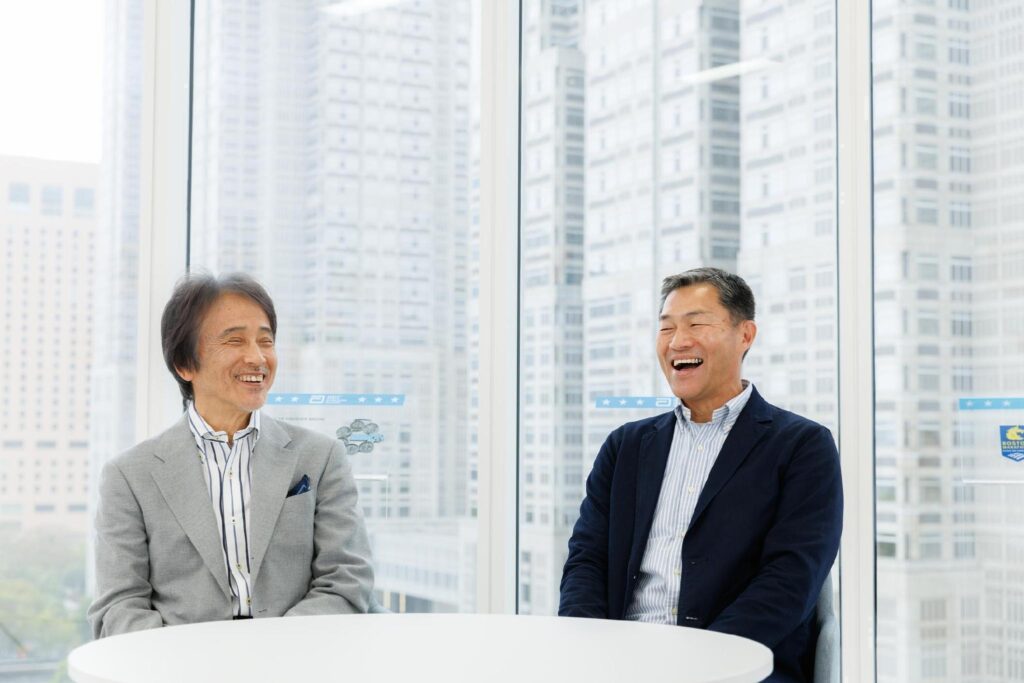
— As you handed over the Race Director role to Mr. Oshima, what expectations did you have for him?
Hayano: Even more crucial than technical expertise is how one approaches our relationship with AbbottWMM and the passion for the Tokyo Marathon. You have to generate revenue while collaborating closely with JAAF, the Tokyo Metropolitan Government, and our corporate partners, all while maintaining global race standards and fostering strong ties with domestic competitions. It requires the ability to see the big picture and manage all these moving parts. That is how heavy the responsibility of Race Director is—a duty owed not only to elite athletes, but to every single runner who joins the marathon as a general runner as well. That is precisely why I spoke with him several times after his appointment about the resolve required—driven, of course, by my heartfelt wish to see him become a truly great Race Director.
There is one more thing I hope never changes: shifting the spotlight exclusively onto Japanese athletes simply because this event is hosted in Japan, which would stray from global standards. The true value of the Tokyo Marathon lies in providing a world-class stage where Japanese runners can challenge themselves at the absolute highest global level as they strive to qualify for the Olympics and World Athletics Championships. I want him to hold firm to that principle and continue delivering that powerful message to Japanese runners.
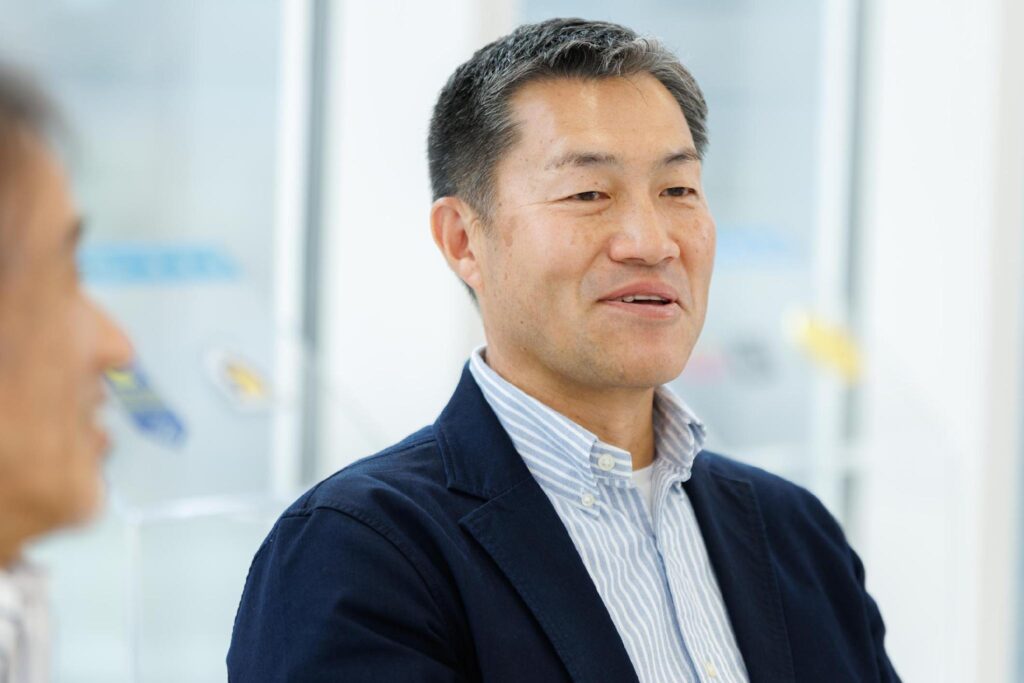
Oshima: When I stepped into the role, the Tokyo Marathon had already established itself as an event where world-class athletes, including Eliud Kipchoge, assembled to deliver one of the fastest elite races in the world. I feel a firm responsibility to uphold and continue that momentum.
Equally important in event management is making safety our absolute top priority. While preventing every medical emergency with 100% certainty is impossible, I remain determined to uphold this uncompromising commitment to safety.
Runners are not the only protagonists. This event relies on the dedication of countless individuals. Beyond the Tokyo Marathon Foundation staff, we have our volunteers, spectators cheering along the course, police, fire departments, and it is through everyone’s collective effort that “The Day We Unite.” comes to life. When the race comes to a close, I want every single person involved to feel from the bottom of their heart, “I am so glad I was a part of the Tokyo Marathon today.”
The Tokyo Marathon Adapting to the Changes of a New Era
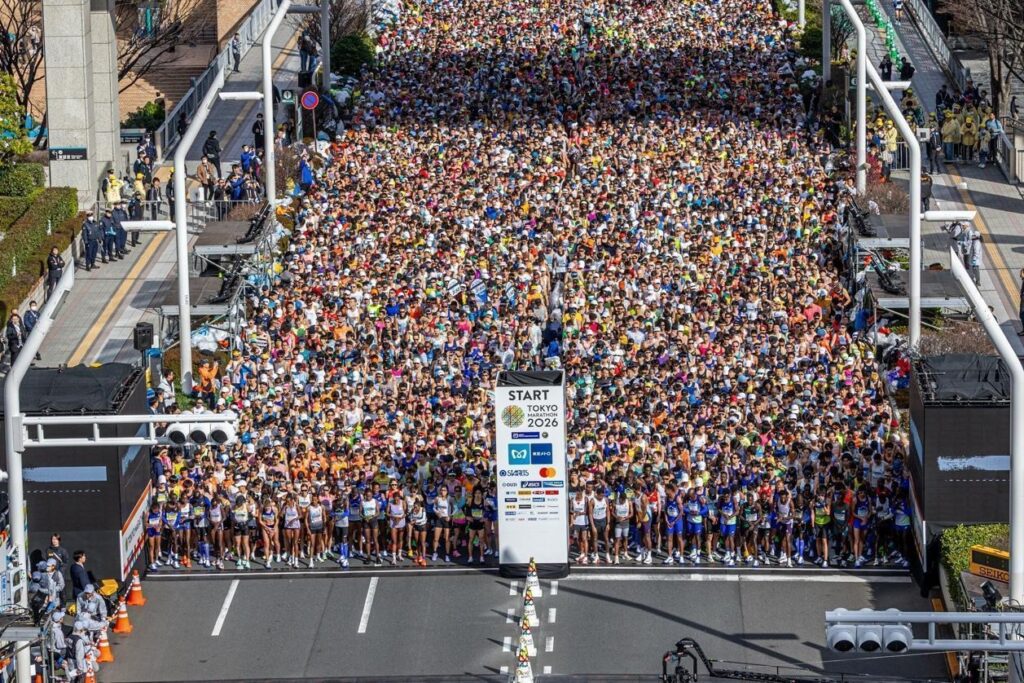
— Looking ahead to the changes of a new era, what are some of the goals you hope to pursue with the Tokyo Marathon?
Oshima: We are currently experiencing a global running boom, and major races across AbbottWMM such as the TCS London Marathon and the TCS New York City Marathon are actively targeting a scale of 50,000.
This indicates that so many people are seeking a grand stage where they can be the star of their own story. Since runners choose to take part in the Tokyo Marathon, I want to ensure that as many as possible look back and feel, “I am truly glad I ran.” To make that happen, I hope to gradually expand our current field from roughly 40,000 participants in the future.
In addition, while our elite race consistently yields world-leading times, a world record has yet to be set on the Tokyo course. I have a strong desire to make Tokyo a place where world records are set in the near future.
Hayano: As Chairman and CEO, my expectation is that we will further elevate our marketing efforts, invite the world’s absolute top-tier athletes, and build a race where world and national records are broken one after another.
— As technology continues to evolve in the coming years, how do you, as Race Director, plan to embrace these advancements?
Oshima: I understand that the TCS London Marathon is incorporating AI into its entry system, and the Bank of America Chicago Marathon is reportedly introducing a similar setup. We are exploring a variety of possibilities for the Tokyo Marathon as well, and I anticipate our adoption of such technologies will only continue to expand moving forward.
Additionally, in the United States and Europe, participation among younger generations is remarkably high. In fact, I hear that the largest demographic at the TCS London Marathon and the TCS New York City Marathon consists of runners in their 20s—with women making up the largest share. In contrast, the core demographic at the Tokyo Marathon is currently in their 50s, while participation among those in their 20s remains relatively low. That said, even here in Japan, we see a growing number of young people running in groups at night. To effectively reach and engage this audience, we will need to actively leverage technology in our marketing and communications.
The Value of the Tokyo Marathon – “Connections between People”
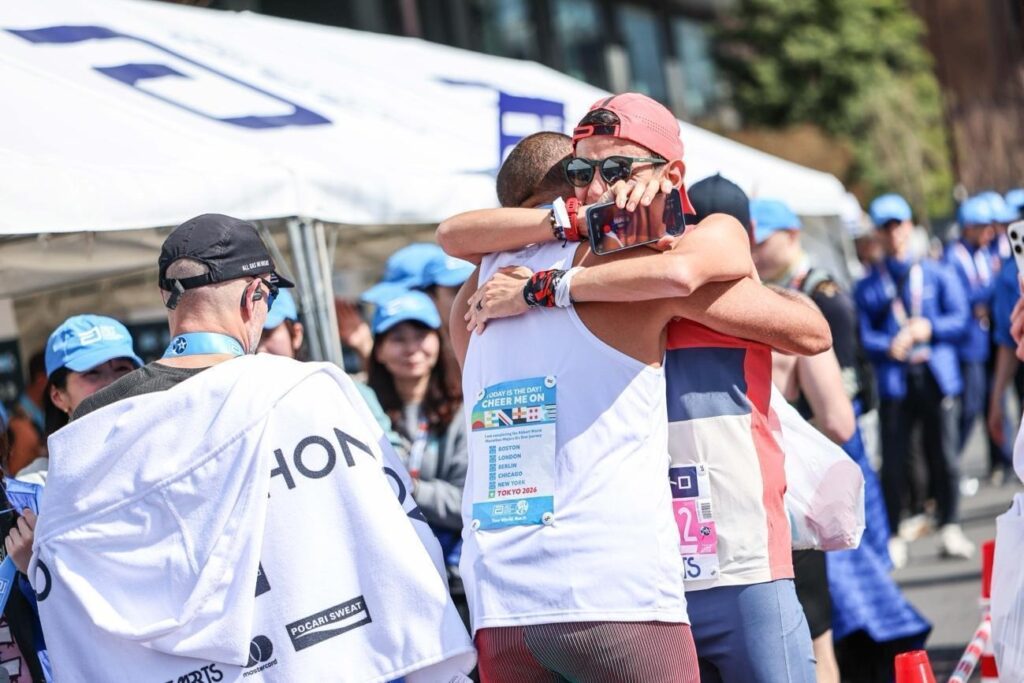
— What do you both consider to be the true value of the Tokyo Marathon?
Hayano: I believe our role is to continually provide a safe, secure stage that makes runners think, “I want to come back and run this again.”
Another vital aspect is the message we share each year. Just as we have championed a different theme each year, such as from “TOKYO, My favorite place…” in 2024, “SPARK!” in 2025 and “Run. Tokyo. Own.” in 2026, we will continue to convey social values and messages that resonate with the spirit of each era.
Oshima: For me, the absolute greatest value of the Tokyo Marathon lies in its people. Beyond our operational staff, so many individuals—from our volunteers and cheering spectators along the streets to the police and fire departments—support this event with immense passion and dedication.
I believe this is because the philosophy and spirit cultivated over nearly two decades have been deeply inherited by everyone involved. This is a value I am determined to cherish and preserve as we move forward.
Hayano: I believe the “connections between people” lie at the very core of the Tokyo Marathon’s concept. When we redesigned our event logo, we visually expressed these “connections between people” through the colors, angles, and widths of its lines. Different colors overlap to weave a single, collective story. My desire is to continue organizing a marathon that makes everyone proud to be a part of that story.
How each person experiences these connections will naturally differ. Even so, guided by our core philosophy of “The Day We Unite.”, we remain committed to managing an event where diverse people intersect—each bringing their own unique color, yet unifying as one to carry our vision forward into the future.
Oshima: I believe those connections extend far across the entire world. At the Tokyo Marathon 2026, roughly 39,000 runners participated, and nearly half of them were international runners. There are so many people who think “I want to run Tokyo someday.” In fact, we receive emails from people overseas echoing such messages. Knowing that the connections between people are expanding globally through the Tokyo Marathon fills me with genuine excitement for the future.
Our Commitment to Being the World’s Best Marathon
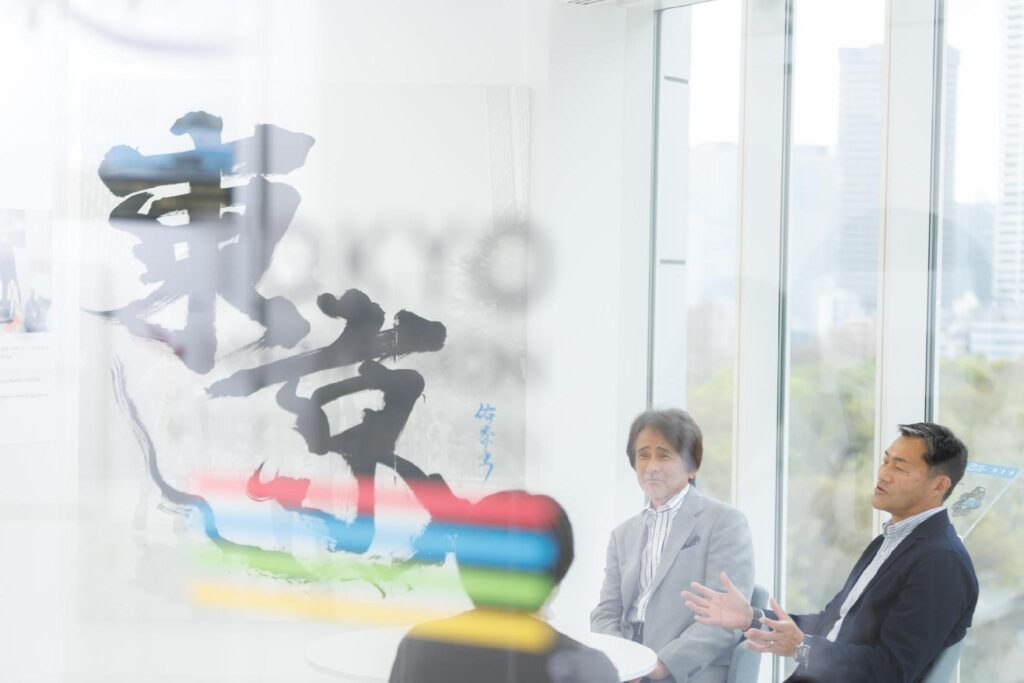
— In 2027, we finally reach the milestone 20th edition. What kind of event do you hope to make?
Hayano: We are planning a wide range of initiatives for the 20th anniversary event. However, what we ultimately strive for remains unchanged. If there is one thing we want to pursue even further, it is a broader “reach.” Sports are not just for spectating; they allow people to take part directly, with every participant getting to step into the spotlight. That participation directly fosters better health, vibrant community development, and personal growth. Through the platform of the Tokyo Marathon, we want to broadcast that inherent value not just within Japan, but to the entire world.
As we mark each milestone—reflecting on the past decade and looking forward to the next—our specific messaging will evolve with the times. Yet our core pillar remains steadfast: to host an event that is safe and secure, exciting, and filled with warmth and hospitality. Our commitment to being the world’s best marathon will never waver.
Oshima: We have numerous concepts in the works for the 20th anniversary event. While much of it cannot be revealed just yet, in the elite field we hope to invite inspiring top-tier athletes who captivate our audience and take on a variety of new challenges.
Ultimately, I hope the 20th anniversary event offers everyone a tangible sense of what the next 10 or 20 years will bring. We want to deliver an experience that allows people to clearly picture the exciting future ahead.
— Looking ahead 10, 20, or even 50 years down the line, what legacy do you hope to carry forward to future generations?
Hayano: I feel a bit unsatisfied with how sports currently remain confined to a niche form of entertainment. I want sports to hold a far more central place in everyday society. To make that happen, we need to transform the mindset of the entire industry. As Chairman and CEO of the Tokyo Marathon Foundation, I want to actively advocate for that deeper value moving forward.
Oshima: I believe our greatest asset is our people. And, I think that the culture of compassion and the deep connections by these very people over two decades are what truly define the essence of the Tokyo Marathon. While new challenges and changes will surely continue, I truly hope we can pass this warmth down to the next generation without it ever fading. At the same time, I want us to pursue initiatives that continuously offer insights through the Tokyo Marathon into the vital role sports can play in urban development and community building.
— Finally, do you have a message for everyone involved with the Tokyo Marathon—the runners, volunteers, cheering spectators, and all those supporting the event?
Hayano: While our role is to organize the race, the true protagonists are all of you. Beyond the runners themselves, even if you have never run before, you can join as a volunteer, and simply cheering along the course is a wonderful form of participation. We want to keep creating more entry points for people to connect with the Tokyo Marathon, promoting the concept of “Sports for All.” I would be truly delighted if everyone felt inspired to engage with the event in their own unique way.
Oshima: I have just one simple message: “Enjoy the Tokyo Marathon.” When something is enjoyable, people stick with it. And when it is enjoyable, that circle of joy naturally expands to those around you. Every single participant is a main character in this event. As the true stars of the show, I hope you enjoy the Tokyo Marathon to the absolute fullest.
The passion handed down from person to person now flows toward the 20th anniversary event, and into the era beyond. Triggered by the Tokyo Marathon, moments when new journeys begin and lives are set in motion will continue to unfold.
Read the Interview Relay 2026 special conversation featuring Tokyo Marathon Foundation Chairman Tadaaki Hayano and Race Director Yasuhiro Oshima,
“Two Leaders Connecting the Tokyo Marathon — The Passion Behind the Race Director’s Baton,” here:
https://interview-relay.marathon.tokyo/2026/interview/2026/04/28/1043
Hear more about her thoughts on the Tokyo Marathon and expectations for its future.

-

World Marathon Voices A Global Perspective on the Tokyo Marathon The TCS Sydney Marathon Race Director Wayne Larden
MORE -
World Marathon Voices A Global Perspective on the Tokyo Marathon Sanlam Cape Town Marathon Race Director Clark Gardner
MORE -

“Running Journeys” to Co-Creating Partner — How Kintetsu International and the Tokyo Marathon Created Unique “Running Experiences”
MORE -
World Marathon Voices A Global Perspective on the Tokyo Marathon TCS London Marathon Race Director Hugh Brasher
MORE -
“People Grow by Being Supported.”~VOLUNTAINER Marked its 10th Year of Foundation – Place where People Come Together, Step Up to Challenges and their Lives Move Forward~
MORE