
2025 Winner Interview|Mr. Kashiwa
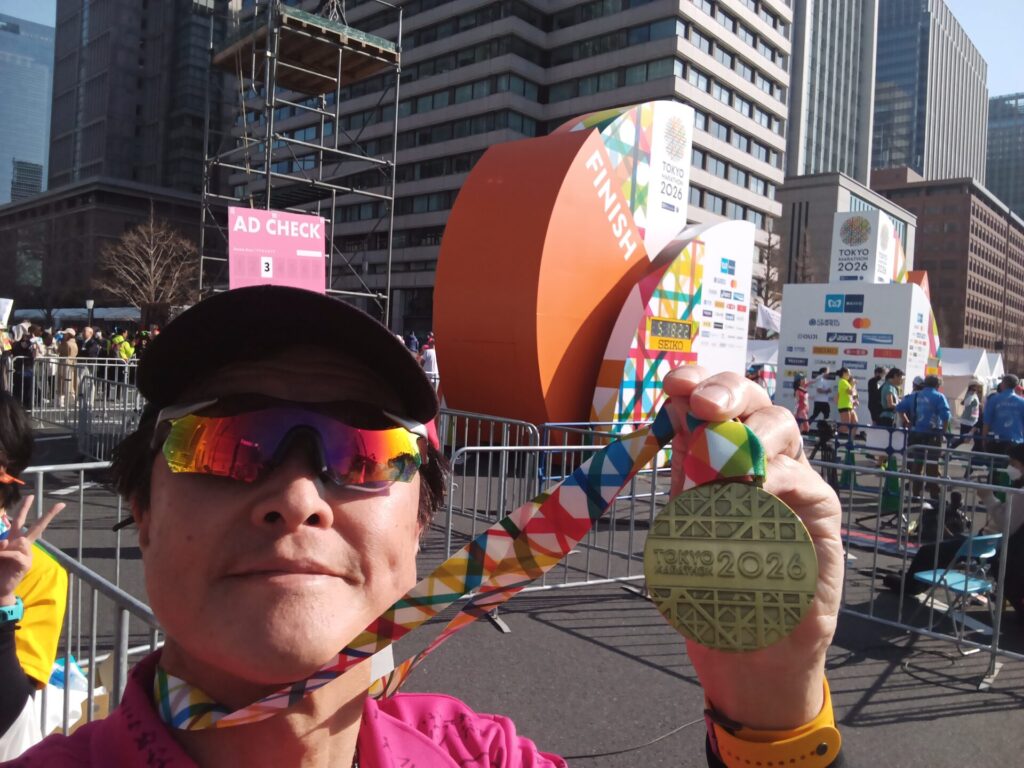
1、From Selection to the Starting Line
Everything started here
In the fall of 2022, I suffered a major medical emergency—I collapsed from a subdural hematoma and underwent emergency surgery. This race was my official comeback.
For me, running the Tokyo Marathon was meant to be a “time slip” of sorts, a journey back through the areas where I spent my challenging days as a student. However, for a while after my illness, I wasn’t just worried about running; I wasn’t even sure if I would be able to return to my life in society.
Slowly, I regained the ability to walk, then eventually to run. It was at that point that I was granted the opportunity to run through the Interview Relay.
This race became more than just a trip down memory lane; it became a symbol of my “recovery from my illness.”
As I currently serve as an elementary school principal, I shared my participation in the marathon with my students during an all-school assembly and posted a link to the Interview Relay on our school website. On race day, I stood at the starting line wearing a shirt covered in supportive messages written by the children.
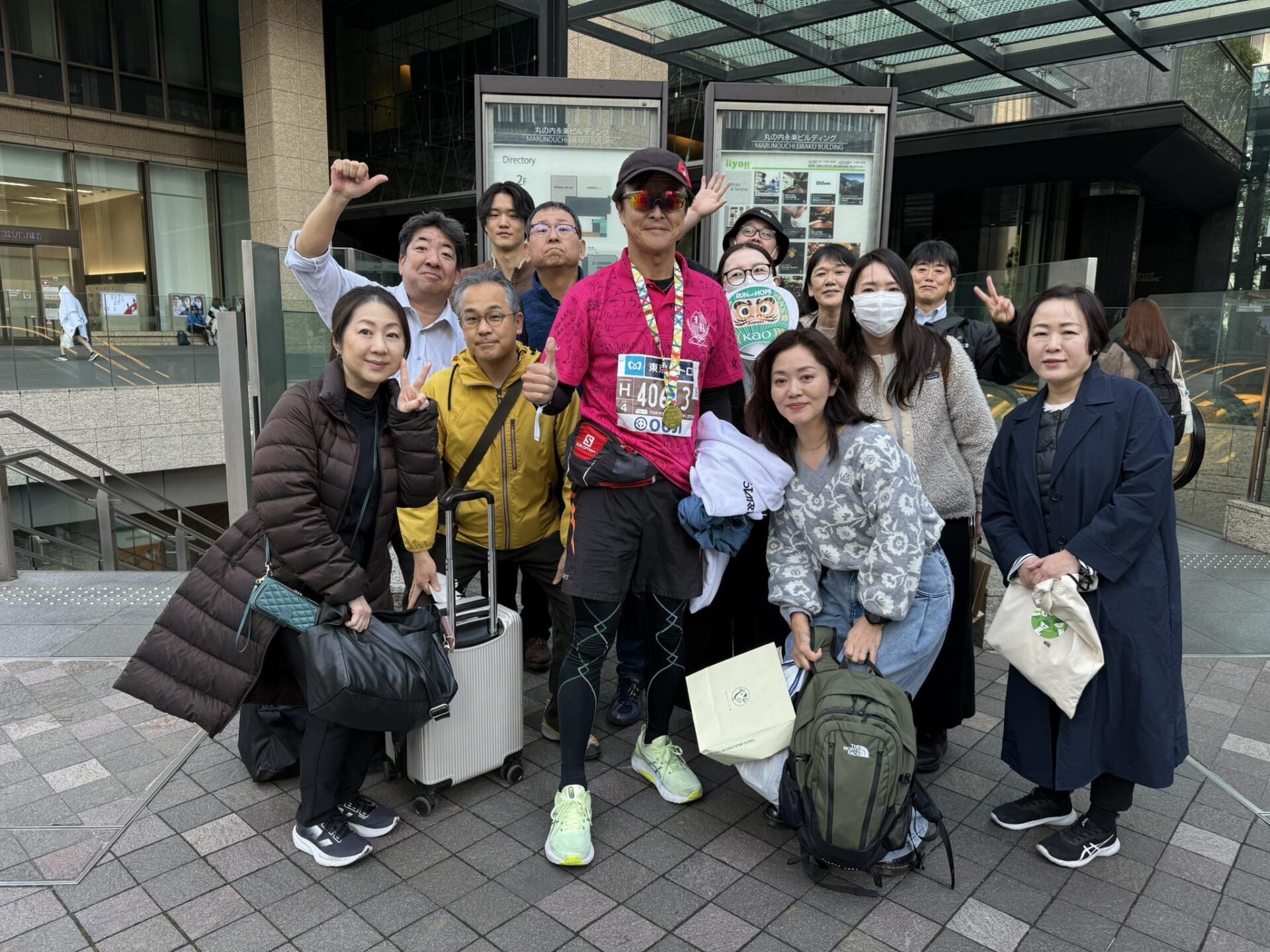
2、The Race Experience
Memories from the Course
Standing at the starting line, I found myself reflecting on my days spent fighting my illness. That moment alone filled me with such deep emotion. I was also delighted when someone struck up a conversation with me, saying, “You’re the principal from the article!” It seems they had read my Interview Relay story.
At the 32km mark, in front of the Nihonbashi Takashimaya—a place filled with memories from my student days—I was greeted by the cheers of my family, friends from high school and university, former students, and colleagues. Their cheers felt like they were directed not only at who I am today but also at the person I used to be. In that moment, I truly achieved my “time slip.”
And then, the finish line! My time wasn’t anything to boast about, but simply being able to finish the race without walking was a source of great hope and joy—not just for me, but for my family and friends who supported me through my recovery, my former students and for the children at the school where I serve.
3、Experience and Growth
What this experience taught me
This was my fifth time participating in the Tokyo Marathon. To me, this event has always been more than just a race, but this time, with the added theme of recovering from my illness, it became an even more profound and meaningful experience.
One of my former students who came to cheer for me said, “Seeing you work so hard out there actually gave me strength.”
Marathon running is a simple sport—you just keep moving toward the finish line. However, I realized that it is a sport that deeply moves the hearts of everyone involved, both those who run and those who cheer.
4、Reflection
Beyond the Finish Line
Once again, I realized that a marathon is essentially an “act of cheering”.
It was a cheer for my younger self who struggled through my student years; a cheer for my family and me for overcoming my battle with illness; and a simple, powerful cheer for my current self and all the participants striving for the finish line. At the same time, it was a cheer from us runners back to the people supporting us along the streets and the staff who made the event possible.
Life brings many challenges, but as long as there is a “cheer” from someone, people can keep moving forward. I felt that the Tokyo Marathon is truly overflowing with that kind of supportive energy.
Tokyo Marathon 2025 Interview Relay – Mr. Shigeaki Kashiwa’s story here

-

World Marathon Voices A Global Perspective on the Tokyo Marathon The TCS Sydney Marathon Race Director Wayne Larden
MORE -
World Marathon Voices A Global Perspective on the Tokyo Marathon Sanlam Cape Town Marathon Race Director Clark Gardner
MORE -

“Running Journeys” to Co-Creating Partner — How Kintetsu International and the Tokyo Marathon Created Unique “Running Experiences”
MORE -
World Marathon Voices A Global Perspective on the Tokyo Marathon TCS London Marathon Race Director Hugh Brasher
MORE -
“People Grow by Being Supported.”~VOLUNTAINER Marked its 10th Year of Foundation – Place where People Come Together, Step Up to Challenges and their Lives Move Forward~
MORE