Interview Relay
Stories — Connected Through the Tokyo Marathon
A Place Where People and the Town Connect“Asakusa” the Town that Supports the Tokyo Marathon and the Event
Interview Relay 2nd Run: Stories of “Connections Between People” Born Through the Tokyo Marathon
In this interview, we introduce a story of connection related to the town of Asakusa, a symbol of Tokyo, located on the Tokyo Marathon course and the Tokyo Marathon.
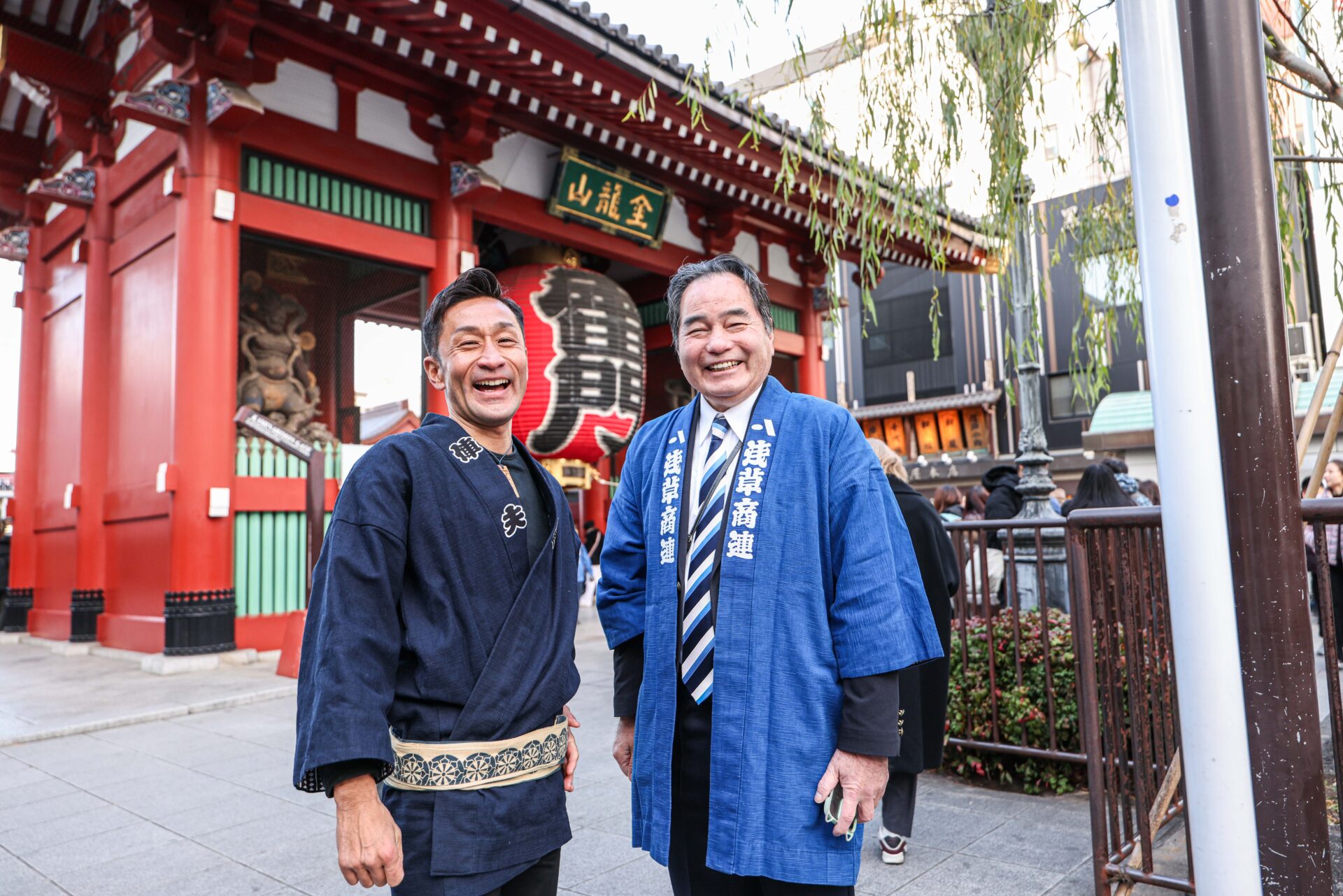
We spoke with Mr. Shigeo Nishiyama, Director of Asakusa Merchants Association and Mr. Kosuke Kajiwara, Chairman of Asakusa Rickshaw Drivers Liaison Association, which organizes rickshaw operators popular with tourists. We asked them about the atmosphere of Asakusa at the time of the inaugural Tokyo Marathon held in 2007, changes up to now and mutual effects, interactions between the town and runners, thoughts they want to share through plogging and what they hope for in the future of the Tokyo Marathon and Asakusa.
Voice of “Opposition” from Asakusa at the Time of the Inaugural Event in 2007
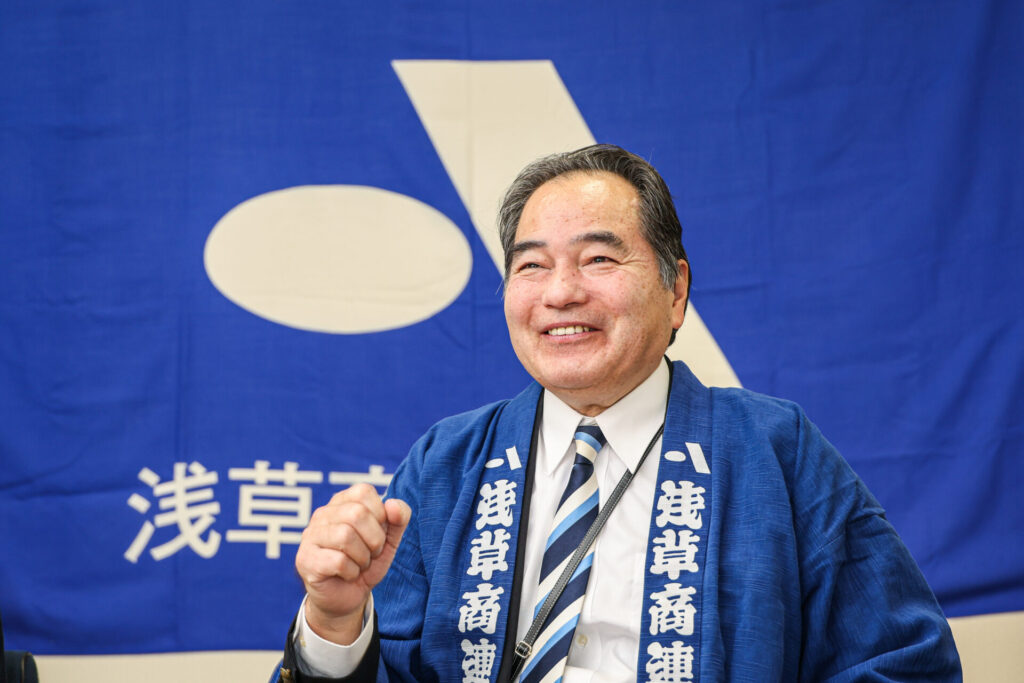
——First, could you please introduce yourselves and tell us about your involvement with the Tokyo Marathon?
Nishiyama: I’m Nishiyama, serving as Director of Asakusa Merchants Association Cooperative. Asakusa Merchants Association is an organization made up of individual stores in Asakusa and provides support to member stores and information about the town and coordinates events held in Asakusa in cooperation with the local community. As for my personal experience with the Tokyo Marathon, I participated in the event as a runner in 2010 and 2011. I’ve never really been into sports, but I have fond memories of how much fun it was.
Kajiwara: I’m Kajiwara, serving as chairperson of the Asakusa Rickshaw Drivers Liaison Association. There are about 20 rickshaw operators in total, large and small, in Asakusa and we manage them. While prioritizing customer safety, we organize guided study groups and address local issues, striving for mutual prosperity with the town.
We have been involved in the Tokyo Marathon since 2024, by guiding runners through Asakusa during plogging events and welcoming runners from Japan and abroad at the Friendship Run.*2
——When the Tokyo Marathon was created in 2007 and you heard that Asakusa and Kaminarimon Gate would be part of the course, what was your impression?
Nishiyama: I was just so excited and thrilled. The whole town was welcoming. Actually, my family home was located in the triangular area where you make a U-turn from Kaminarimon Gate onto Edo-dori Avenue. Roads were closed off on race day, making it impossible to get in or out. Back then, the area was nicknamed the “Bermuda Triangle”, and therefore, my father was a huge opponent (a bitter smile). Because he was running a business, he complained that “No customers came and I couldn’t go outside.”
However, when I won the lottery to run in the 2010 race, the situation changed completely. He could no longer oppose, right? On race day, as I ran toward Kaminarimon Gate, everyone in town was cheering for me, and even my father, who had been so against it, was there in the front row shouting, “Go for it!”
——It was Mr. Nishiyama’s running that turned things around and led to the approval.
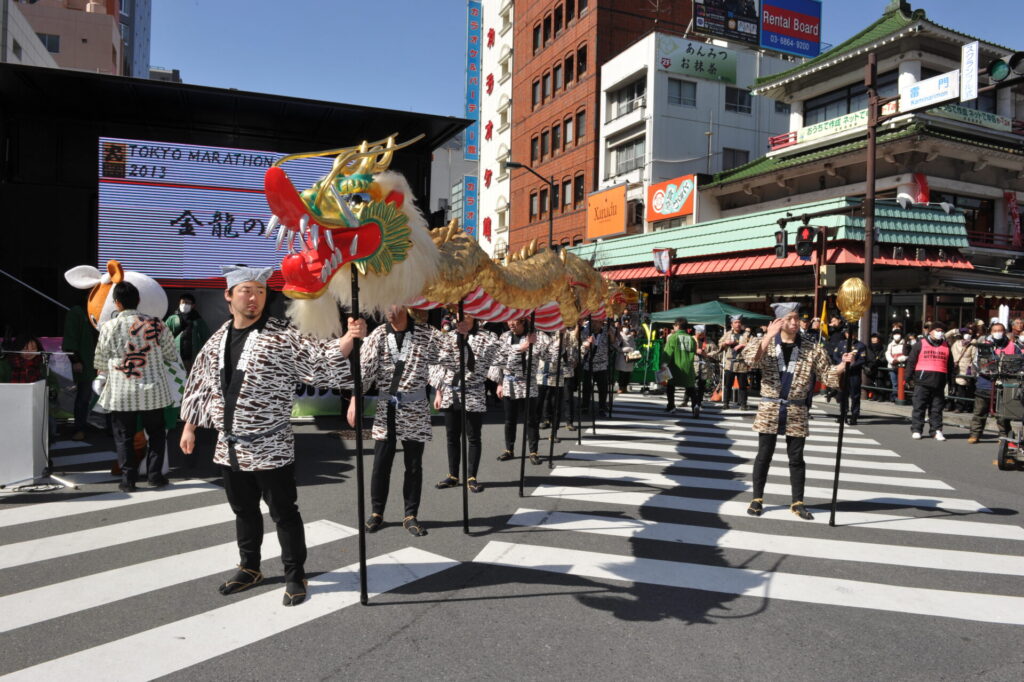
Scene from the event held in Asakusa at the time of the Tokyo Marathon 2013
Nishiyama: Yes, that’s right. Back in 2010 and 2011, our whole family, with my father leading the way, had been planning how to cheer for me for a long time (laugh). Underpasses have now been developed, and since the “Bermuda Triangle” has been eliminated, my entry has transformed the atmosphere into a warm welcome for the Tokyo Marathon.
Kajiwara: What a heart-warming story! I came to Tokyo in 2013, so I am not familiar with the atmosphere at the time of its establishment, but the first big event I experienced after coming to Asakusa was the Tokyo Marathon. Back then, rickshaw operators were increasing, and some people were wondering, ‘Are these rickshaws really a good idea?’ Meanwhile, some locals advised me to take a different route because this road would be closed. At that moment, I realized that Asakusa is a town that truly pulls together when something happens. Its collective power is incredible. Back then, on race day, the Kaminarimon Gate turnaround point was alive with geisha performing their dances.
Nishiyama: Yap, they were dancing, and the children were performing, and the whole town would get together to liven things up.
Kajiwara: When I saw it, I realized ‘Wow, the whole town of Asakusa is going all out for the event.’ For a runner, after all, it’s just a fleeting moment as they pass through, isn’t it? I have a vivid memory of being overwhelmed by the energy of the neighborhood, feeling as if they had poured the entire essence of Asakusa into it.
Nishiyama: Back then, we used to set up a stage on a truck in front of Kaminarimon Gate to hold events. We have now moved the venue to Komagata Bridge, but Kaminarimon Gate still looks stunning, as always. I think the overall excitement of the town boosts the runners’ spirits. Even for me, who is familiar with Asakusa, running through it felt like seeing it from a different perspective, and my spirits soared.
Bonds within the Town Strengthened by the Tokyo Marathon during the COVID-19
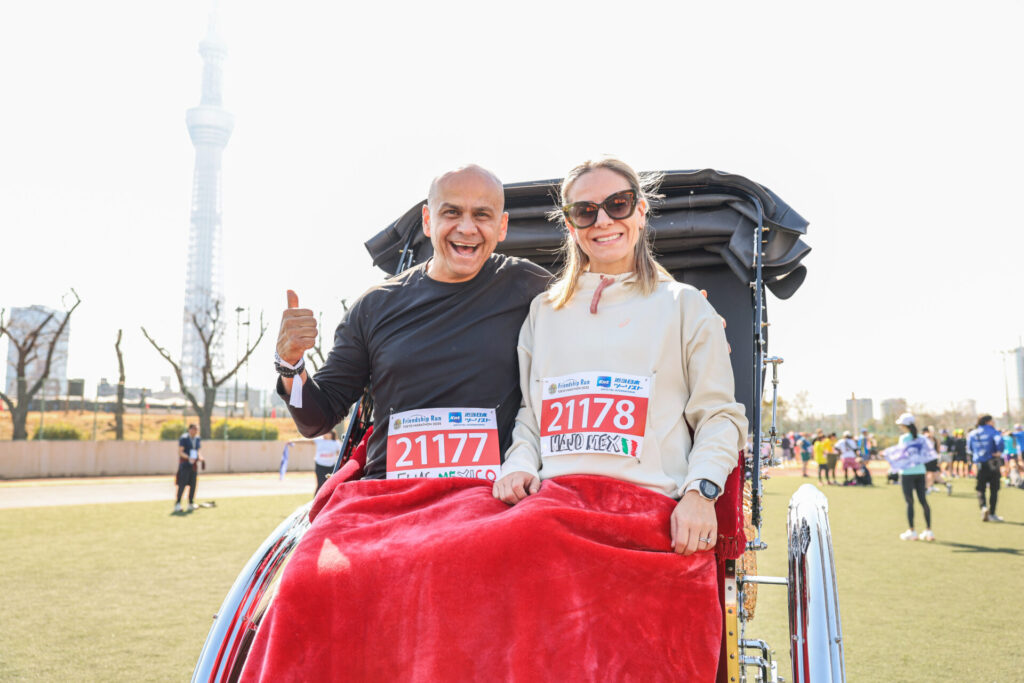
Programs to Experience Japanese Culture Offered at the Friendship Run
——Compared to the inaugural Tokyo Marathon, how do you feel about the changes in the town of Asakusa and the Tokyo Marathon?
Nishiyama: During the pandemic, we were expected to stay home and avoid cheering out loud at events. However, people in Asakusa prefer to see things with their own eyes rather than on a TV screen. We want to see not just people we know, but all kinds of people running. We went outside and cheered for them in our hearts, without making a sound. It was a great chance to see ‘everyone is doing well.’
Kajiwara: That’s right. We really shouldn’t have been in such close contact during that time, but seeing everyone at the Tokyo Marathon made us feel relieved.
Nishiyama: That’s right. We really shouldn’t have been in such close contact during that time, but seeing everyone at the Tokyo Marathon made us feel relieved.
Kajiwara: The Tokyo Marathon has a unique power called “cheering.”
Nishiyama: Seeing the runners give it their all actually gives me a boost of energy. That’s why everyone wants to see the marathon right in front of them. Seeing the faces of everyone in town, I feel that the Tokyo Marathon has become an integral part of Asakusa.
——How do you see the interaction between the town and runners through the Tokyo Marathon?
Nishiyama: We, the Asakusa Merchants Association, also support the Tokyo Marathon Friendship Run*1 and Tokyo Running Festa *2, so that’s another big thing to look forward to. Most of the participants are runners from abroad, and everyone looks like they’re having a blast. We look forward to seeing that smile every year.
Kajiwara: Seeing them come back with a smile saying, ‘That was fun!’, makes me feel like our town’s hospitality really reached them.
Nishiyama: I think this fits perfectly with the values cherished in Asakusa. Since everyone enjoys the Friendship Run in such a relaxed way, I find a different kind of fulfillment in helping out here compared to the Tokyo Marathon. I can feel the event really soaking into the community, and I’m truly experiencing a sense of ‘friendship’ with all the runners.
Kajiwara: In our case, for example, when we ask customers who take our rickshaw a few days before the Tokyo Marathon, ‘What brings you to Asakusa?’ quite a few of them say, ‘Actually, I’m running in the Tokyo Marathon.’ We have met those people again at Friendship Runs many times. That is the genuine moment of friendship, we really feel.
Nishiyama: I really feel that the Tokyo Marathon and Friendship Run are bringing a lot of life and interaction to the town.
“Asakusa x Tokyo Marathon” from the Perspective of Runners
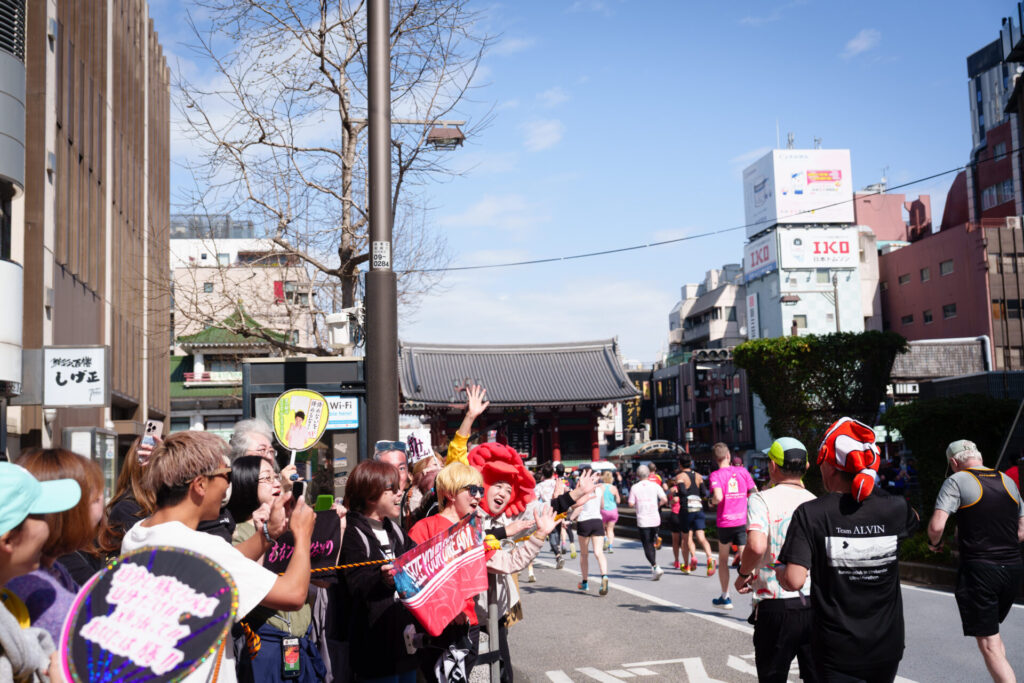
東On the Day of the Tokyo Marathon, the Streets of Asakusa are Filled with the Passion of Runners and Spectators
——Then, what about the Tokyo Marathon from the perspective of a runner?
Nishiyama: To be honest, before I started running, I used to wonder “why would anyone put themselves through all that pain” (laugh). But when I actually gave it a try, it was so much fun! Although it was a cold, rainy day when I ran in 2010, running through Asakusa really gave me a boost of energy.
With such amazing support, I felt like I had all of Asakusa on my side. At first, I was training hard for a sub-4 finish or just to complete the race. Actually running it, the feeling of “having fun” completely outweighed the sense of “competing.” Because of that, as soon as I passed Asakusa, I suddenly lost all my strength (laugh).
Plus, running straight toward Kaminarimon Gate from the middle of the road is such a unique experience. This is surely an incredibly emotional moment, especially for runners from abroad. Asakusa and Kaminarimon Gate are like the “entrance to Japan.”
——Was there a moment when you felt that Asakusa became more well-known through the Tokyo Marathon?
Nishiyama: Regarding that, I feel like there is some interaction going on between them. I believe the Tokyo Marathon is one of the reasons Kaminarimon Gate became so famous worldwide. It’s definitely an iconic landmark you can’t miss for the Tokyo Marathon, right? Kaminarimon Gate and Tokyo Marathon, both have enhanced each other’s charm over the years.
Kajiwara: We often have many runners riding our rickshaws the day after a race and showing us their finisher medals! It’s great to see runners enjoying Asakusa twice—once during the race and again for sightseeing the next day.
Nishiyama: As I’ve said, this is truly a one-of-a-kind event where you can run through the very heart of Tokyo’s main streets and pass right in front of the Kaminarimon Gate. I want all the runners to soak up the atmosphere. As the whole neighborhood of Asakusa joins the festivities, I truly feel it embodies the Tokyo Marathon slogan: “The Day We Unite.” Runners, spectators, and the streets of Asakusa all come together as one. I think you only see this at the Tokyo Marathon.
Tokyo Marathon and Asakusa from the Perspective of the Head Priest of Senso-ji Temple
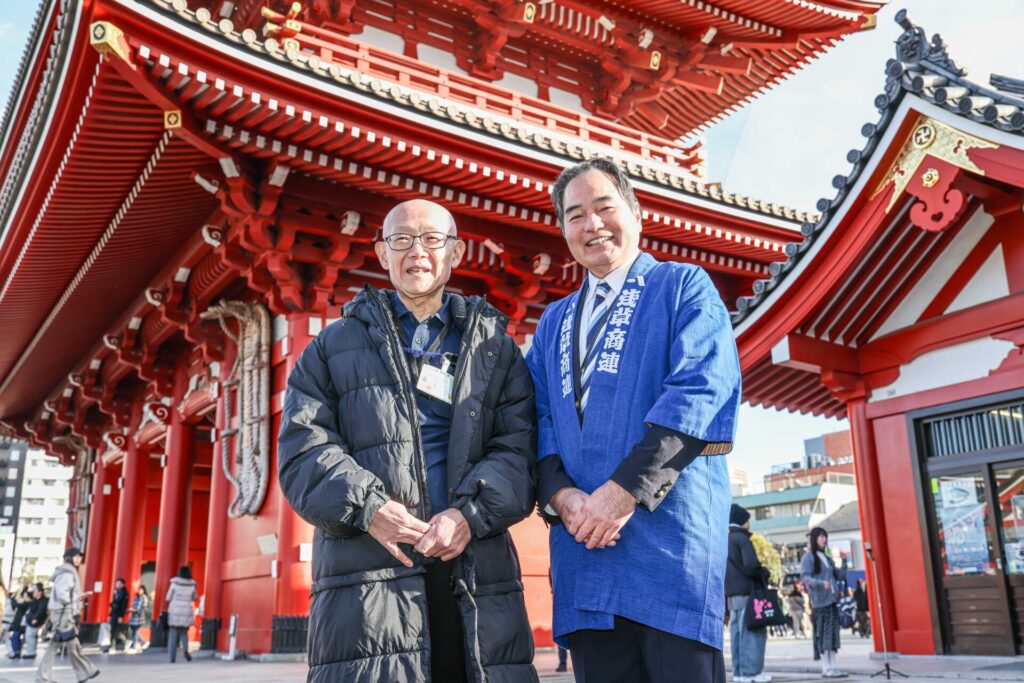
We also spoke with Mr. Akinari Tanaka, Head Priest of Senso-ji Temple, Myo-On-In, who has completed the Tokyo Marathon as a runner many times, about the charm of the Tokyo Marathon and the transformation of Asakusa.
Head Priest Tanaka: The best part of the Tokyo Marathon is definitely how the scenery keeps changing, and the expressions of the supporters changed one after another in response. Given my fickle nature, this race is a blast because it keeps things interesting.
I feel like the streets of Asakusa have become more and more beautiful with each passing event. As more people share photos of the town on social media, the digitalization of society has increased Asakusa’s visibility and made it easier to cheer on marathon runners. A lot has changed in that regard since the very first event. In addition, on the day of the Tokyo Marathon, Asakusa is packed with people cheering and the entire area is buzzing with excitement. While it’s not without its challenges, I feel that the Tokyo Marathon has definitely brought a sense of revitalization to the Asakusa area.
“The Day Tokyo Becomes Beautiful” – Plogging Event Held in Asakusa a Day Before the Race
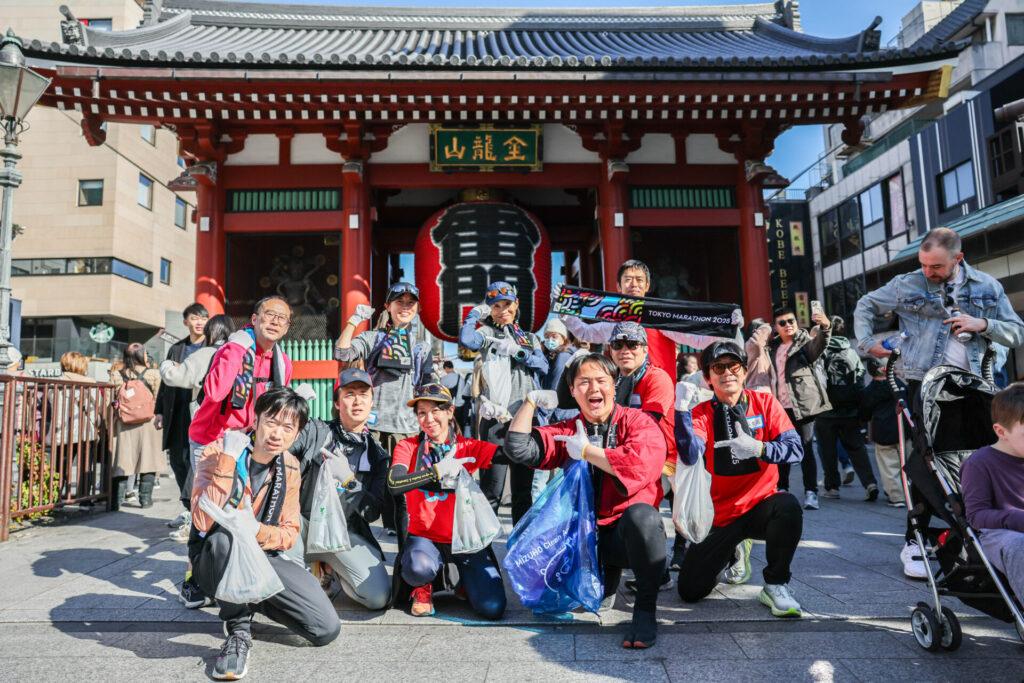
Tokyo Marathon 2025 Plogging Event
——Regarding the plogging event which started in 2024, please tell us the reason why the rickshaw drivers are participating as guides.
Kajiwara: When we first heard from the Tokyo Marathon Foundation, we felt a strong sense of affinity with our goals. Actually, we rickshaw men clean up the streets of Asakusa every morning before we start working. We pick up litter to show our gratitude to the town – the place we work, and to ensure our customers enjoy a beautiful view of the streets.
Moreover, I also thought that plogging events serve as a key “showcasing tool,” especially for international audiences. In Japan, we have a cultural norm of taking our trash home rather than throwing it on the street. I felt this event could help convey basic Japanese manners. Wearing the traditional attire of a rickshaw puller dedicated to preserving Japanese culture, I am cooperating with this event, driven by a desire to help spread this message.
——Runners express their gratitude for the holding of the Tokyo Marathon in Asakusa by “cleaning the streets.” What do you think of the significance?
Kajiwara: I think local residents usually do the litter picking. I believe that as runners pick up litter in unfamiliar places, it gives them a wonderful opportunity to connect with the local community and feel a true sense of togetherness.
Nishiyama: I think plogging is a wonderful event. I often hear visitors from abroad say “Japanese towns are clean,” but we still end up having some trash. That’s exactly why seeing people picking up litter touches our hearts, and I believe the mindset of ‘let’s keep our town clean’ naturally spreads.
Kajiwara: I will be supporting the Plogging Event to be held on Saturday, February 28, 2026.*3 I look forward to interacting with many runners again this year.
The Unchanging DNA of Asakusa’s OMOTENASHI (hospitality)
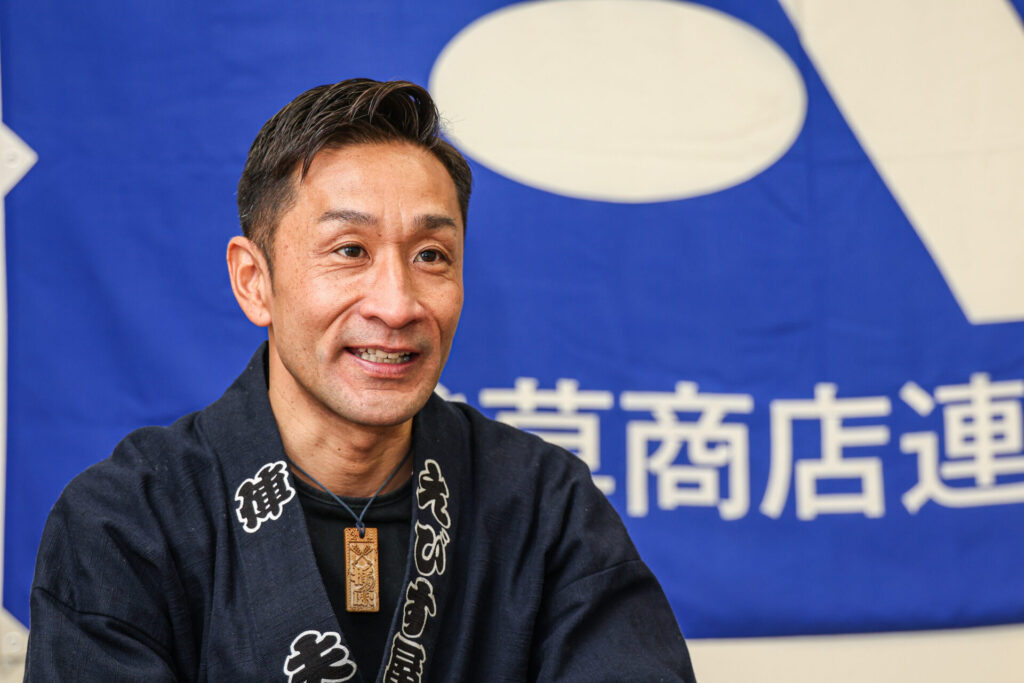
—— The Tokyo Marathon has been continuously held since 2007 and continues to build on its history – what do you think that means for Asakusa?
Kajiwara: Like any event, the Tokyo Marathon hasn’t always had a smooth ride. It has overcome various hurdles and grown stronger with each passing year. I believe the consistent DNA of Asakusa is its spirit of OMOTENASHI (hospitality). Our dedication to making runners passing by and supporters coming to Asakusa happy will live on for generations.
Nishiyama: What makes the Tokyo Marathon truly unique is how it brings people from all over the world together as one. It’s a great opportunity to showcase the best of Japan, and I feel the significance of this event from both a runner’s and a supporter’s perspective. I hope to continue being involved in this event, as it holds great significance not only for Asakusa and Tokyo, but for all of Japan. It’s a very meaningful event for passing down our culture, as people of all generations can get involved in their own way.
——Finally, could you please share a message for runners who will run the Tokyo Marathon as well as for people who will come to Asakusa?
Kajiwara: Asakusa always welcomes you with a smile. Come and break a good sweat!
Nishiyama: Just enjoy it! Enjoy running through the heart of Asakusa, soak up the entire Tokyo Marathon experience, and join us as “The Day We Unite”.
*1 Tokyo Marathon Friendship Run 2026
https://www.marathon.tokyo/en/events/friendshiprun
*2 Tokyo Marathon Running Fest
https://www.marathon.tokyo/en/events/running-festa/
*3 Tokyo Marathon 2026 Plogging Event
https://tm2026plogging.peatix.com