Interview Relay
Stories — Connected Through the Tokyo Marathon
“Charity and Legacy: Forging Bonds for the Future”~ A Story of Connection, Born from the Fusion of the Tokyo Marathon Charity and the Sport Legacy Program ~
Interview Relay 2nd RUN: Stories of “Connections Between People” Born Through the Tokyo Marathon.
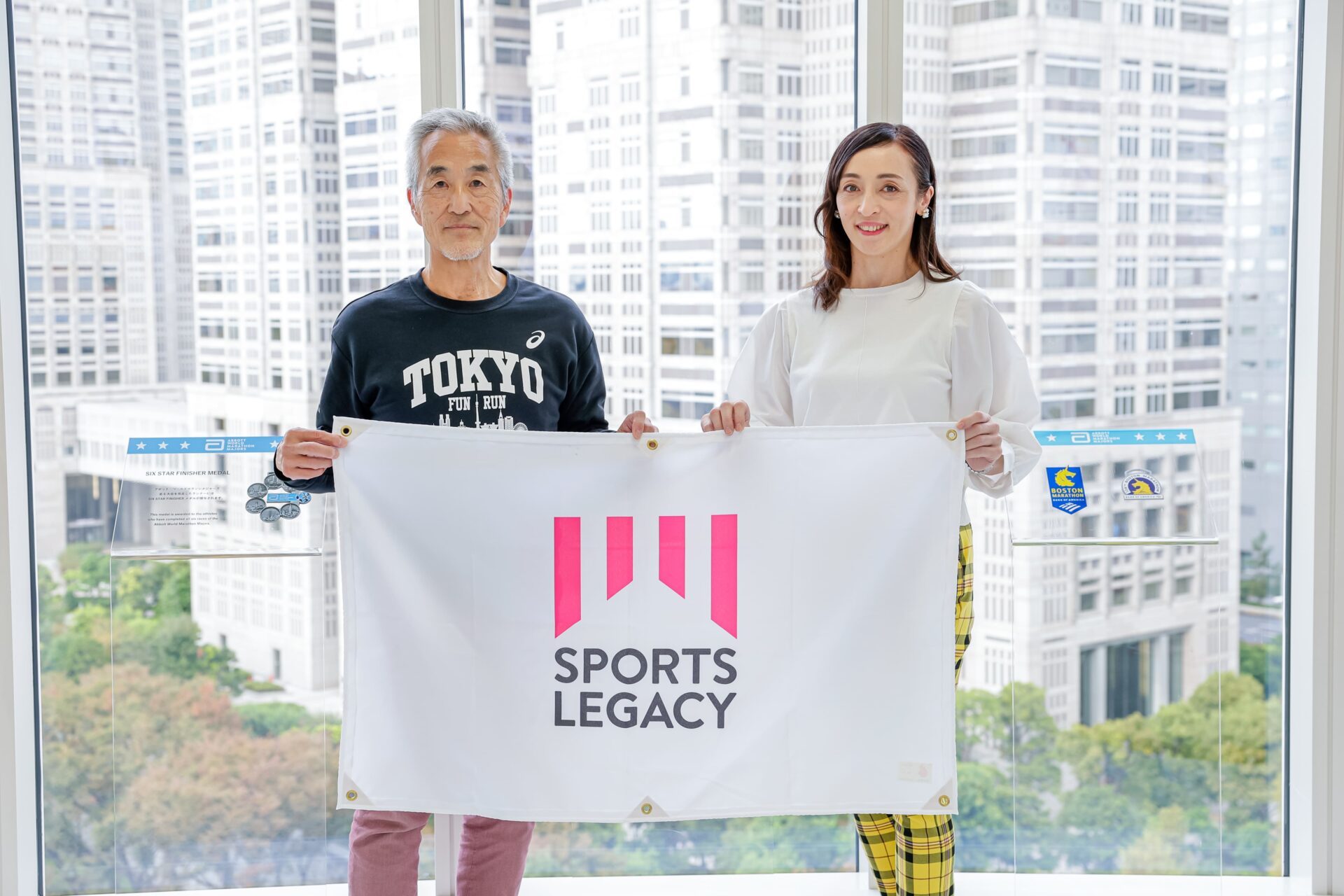
In this interview, we spoke with Kaoru Nakamura, Head of the Charity Division at the Tokyo Marathon Foundation, and Yuka Murofushi, a Board Member of the Japan Association of Athletics Federations (JAAF) and faculty member at Juntendo University’s Faculty of Health and Sports Science.
They shared the story of connection born from the fusion of the Tokyo Marathon Foundation’s Sport Legacy Program—one of its key social contribution initiatives—and the Diamond Athlete Program, which is one of the recipients of its support. We asked them about the Foundation’s charity work, the Diamond Athlete Program, and the future developments they envision through these efforts.
The Tokyo Marathon: An Event Where You Can Contribute to Society While Running
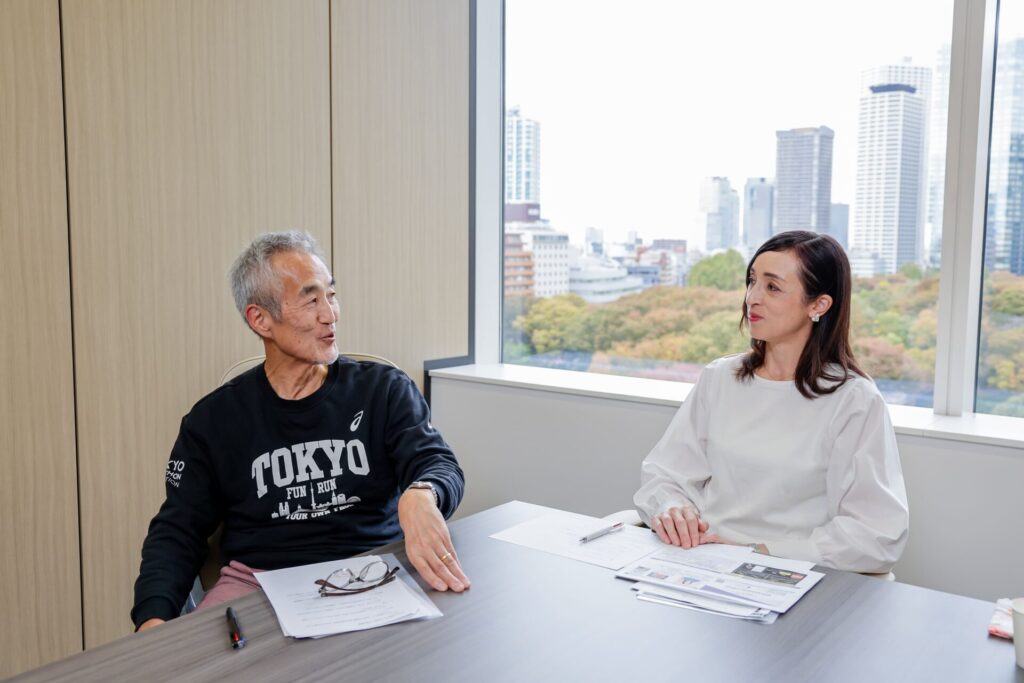
——First, could you please introduce yourselves, including the roles you are currently responsible for?
Nakamura: The Tokyo Marathon features a “Charity Runner” system, which allows participants to enter the race specifically as charity runners. We ask those who wish to run in this category to donate 100,000 yen or more.
For the 2026 race, we have selected 37 organizations and 39 projects involved in social contribution based on specific criteria. My current job is to recruit charity runners who resonate with the visions of these projects and to gather donations that can be utilized for as many social contribution activities as possible.
At the same time, it’s still not widely known that the Tokyo Marathon is an event where you can enjoy running while contributing to society. My major mission right now is to actively get this message out: to lower the barriers to social contribution, and to show people that they can make a difference through sports by donating to organizations whose activities they want to support. It’s not just about raising money; it is about making sure the public knows about the diverse range of social contribution initiatives the Tokyo Marathon is undertaking.
Murofushi: I competed as a track and field athlete for 24 years, specializing in the women’s discus and hammer throw. I represented Japan in the hammer throw at the Athens 2004 Olympic Games and competed in the hammer throw at the 2005 and 2007 World Athletics Championships. I also won a bronze medal in the women’s hammer throw at the Asian Games.
Currently, I am involved in education and research as an Associate Professor at Juntendo University’s Faculty of Health and Sports Science, and I also serve as a Board Member for the JAAF. Since the 8th term (2021-22), I have served as the Program Manager for the “Diamond Athlete Program,” which receives significant support through the Tokyo Marathon Foundation’s charity initiatives.
As Program Manager, my role isn’t limited to planning the curriculum. I am involved from the very beginning—during the athlete selection process—and work in unison with the JAAF’s High Performance Department to discover and nurture talent capable of competing on the global stage.
This is a special development program designed with the hope of cultivating athletes who will take on the world 5 or 10 years from now. We aim to produce individuals like our inaugural members Haruka Kitaguchi (JAL) and Abdul Hakim Sani Brown (Toray)—athletes who base themselves overseas, compete domestically and internationally, and can continue to contribute widely to society even after they retire.
While this program receives backing from multiple corporate sponsors, the Tokyo Marathon Foundation provides extensive support, particularly through its Sport Legacy Program. Thanks to this, we are successfully fostering outstanding athletes who possess not only competitive strength but also strong character and an international perspective.
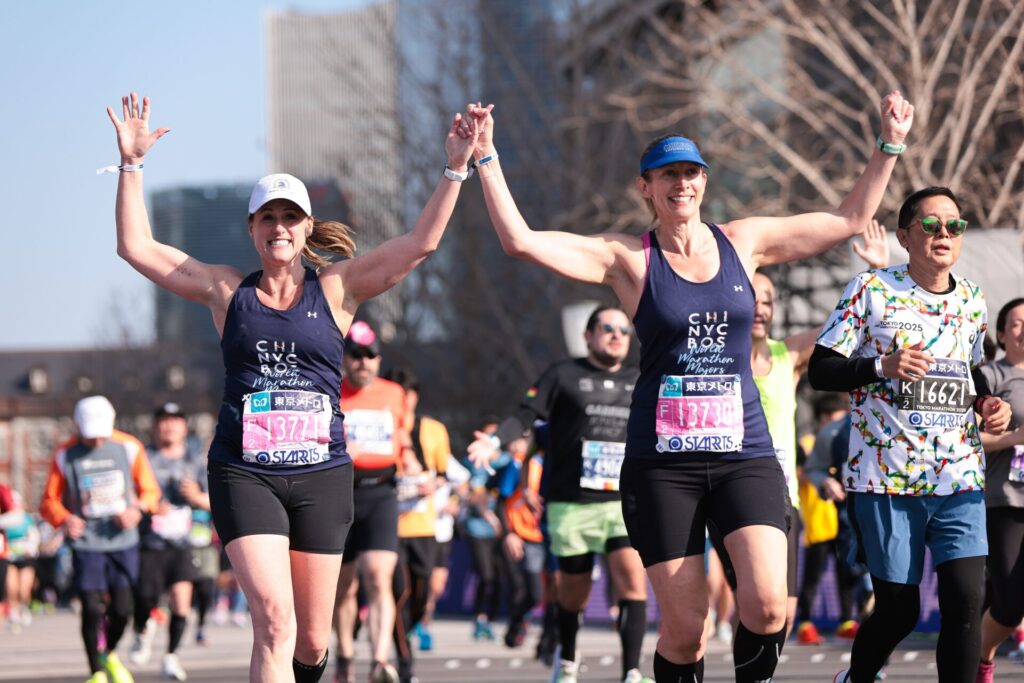
In London, 70% of the 50,000 Runners are Charity Runners
——What significance does social contribution hold for the Tokyo Marathon?
Nakamura: As we face social challenges such as a declining birthrate, an aging population, and the need to extend healthy life expectancy, we believe that running and sports can be a means to improve health. We also want to demonstrate that it is possible to help solve social problems while participating in sports.
I feel that clearly communicating these opportunities and creating that spark is something the Tokyo Marathon Foundation can champion through this event.
The Tokyo Marathon held its first event in 2007, and the charity system began in 2011. In the 15 years since, it has gradually grown. For the 2025 race, out of about 38,000 total runners, we have set a quota of 5,000 charity runners.
Murofushi: You have as many as 5,000 charity runners? That is surprising.
Nakamura: The amount raised for the Tokyo Marathon 2026 reached a record high of approximately 1.28 billion yen. However, among the World Marathon Majors, having 5,000 charity runners is still a small number. There are other races in the world where the culture of charity is far more deeply rooted and operates at an even higher level.
At the London Marathon, for example, nearly 70% of the 50,000 runners participate as charity runners. A single event raises over 10 billion yen, and it is said that the average donation per person is around 700,000 yen.
Murofushi: That is incredible. I never imagined the donations amounted to that much!
Nakamura: However, the runners don’t bear this entire cost themselves. In London, the act of “cheering for a runner” is deeply intertwined with the charity culture. It seems to be an established custom for a runner’s family, friends, and colleagues to participate in a form of crowdfunding, donating as a hanamuke (a send-off gift or token of support) for the runner taking on the full marathon.
Murofushi: That kind of custom might not really exist in Japan yet.
Nakamura: That’s true. People chipping in donations as a way to support the runner; the runner who won the lottery running as a representative for everyone. I hope we start to see that kind of movement happen here in Japan in the future.
Murofushi: I think that is a wonderful way of thinking. Even if you can’t run yourself, you can contribute to society through the event, or through someone close to you, with a feeling of “We’re counting on you!”
My own friends who love marathons are always ecstatic when they get in—”I won the lottery!”—or devastated when they don’t. But when one of them does get to run the Tokyo Marathon, the excitement from their social circle is immense (laughs). So, I was already convinced that running the Tokyo Marathon has a definite impact on the people around the runner. But it just occurred to me that if we can connect that excitement to charity, it has the potential to grow significantly—like a snowball effect—and create a truly positive impact.
In the Spirit of Polishing Promising Diamonds in the Rough Together

Fort Kishimoto / JAAF
Recognition Ceremony for the 12th Class of Diamond Athletes and Diamond Athlete Nextage, held on December 1, 2025
——So, what exactly is the Tokyo Marathon Foundation’s Sport Legacy Program?
Nakamura: The Sport Legacy Program is funded by donations raised through sports. Its goal is to create a lasting legacy rooted in sports, based on four key themes: “Sports Dream,” “Sports Foundation,” “Sports Expansion,” and “The Power of Sports.” One of the recipients within this framework is the Diamond Athlete Program. Our support for them began in 2015, with their very first generation of athletes.
Murofushi: The Diamond Athlete Program is a next-generation athlete development project conducted by the JAAF with an eye toward success in future international competitions. Its purpose is not merely to improve athletic performance, but to nurture “global citizens” over the mid-to-long term—individuals equipped with the character and broad perspective needed to thrive in the international community.
In this program, we select athletes who possess world-class potential—what you might call “diamonds in the rough”—and provide them with training plans tailored to their individual characteristics. We have special initiatives in place to support multifaceted growth, including language skills, leadership, and international understanding, alongside athletic improvement.
Furthermore, Diamond Athletes are given annual opportunities to refine their qualities as global citizens. With the support of the Tokyo Marathon Foundation, we conduct educational initiatives like the Leadership Program. From a perspective distinct from athletic training, we provide face-to-face workshops, English conversation lessons, participation in sponsor activities, and support for nutrition and overseas expeditions. We also offer diverse programs necessary for international success, such as understanding sports law and arbitration, financial literacy, and media relations.
Nakamura: That media training is crucial, isn’t it?
Murofushi: Yes, it is. In the limited, short time you have in the mixed zone, you can’t just come up with the right words unless you train for it regularly. At the 2023 World Athletics Championships in Oregon, sprinter Abdul Hakim Sani Brown ran his third sub‑10 second time and advanced to the semifinals. In the mixed zone after that race, he said, “I came here to make history,” and “I want to change history.” Those words were truly impressive. The words and stories athletes share in front of the camera are often broadcast repeatedly as phrases that symbolize them. In that sense, too, I felt Sani Brown was truly impressive!
Also, in media training, athletes receive lectures from experts on which parts of their comments are likely to be “clipped” and broadcast. The ability to instantly articulate one’s strengths and feelings is very important. They learn these skills through practice during the training. Viewers and listeners can receive joy and courage from an athlete’s words. I believe this is one of the powers that embodies the value of sports that athletes can provide.
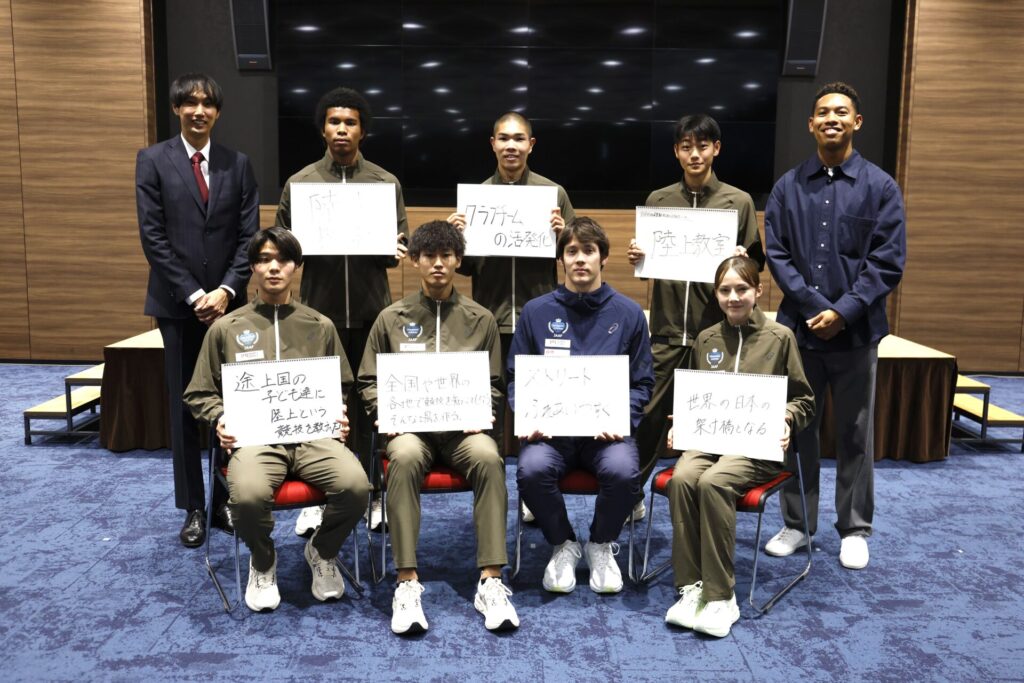
Fort Kishimoto / JAAF
At the first Leadership Training for the 12th class of Diamond Athletes and Diamond Athlete Nextage, Hakim Sani Brown (1st class alumnus) and Naoto Tobe, Chair of the JAAF Athletes’ Commission, joined as instructors.
The athletes also reflected on and presented their ideas about the role of sport and social contribution.
Nakamura: Sani Brown really embodies the success of the development within the Diamond Athlete Program. His impression has changed significantly since he moved to the US, hasn’t it? Not only in his athletic performance, but I can also sense that his mindset and perspective have broadened. It is wonderful to see.
Murofushi: You are absolutely right. Thanks to this support, we have athletes who have competed in, placed in, or even won medals at the World Championships and the Olympics—either while they were still certified in the Diamond Athlete Program or after completing it.
Also, the presence of top alumni like Kitaguchi and Sani Brown, who remain active on the world stage, serves as a major benchmark for our current Diamond Athletes. They engage with the program with strong motivation and eyes sparkling with enthusiasm. We want to continue carefully nurturing their growth through this program so that everyone who donates or supports us feels, “I’m glad I supported them.”
Nakamura: We invite several donors, selected by lottery, to the Diamond Athlete Certification Ceremony. I want the athletes to realize that a portion of the donations gathered through the Tokyo Marathon is supporting them. And for donors, there is the joy of interacting directly with the athletes they are cheering for.
Murofushi: We are very grateful for that. When athletes understand that their ability to perform is supported by so many people, it fosters a deeper sense of gratitude. I believe this understanding gives them the courage to stand back up and the strength to move forward, even during difficult times.
I would be delighted if you could continue to support us with the feeling of “polishing these high-potential diamonds in the rough together”—joining hands with the runners and donors of the Tokyo Marathon. Almost like a form of oshi-katsu (supporting your favorite star/fandom activities) (laughs).
This isn’t an initiative that yields immediate results. However, we are committed to continuing this work over the long term—5 or 10 years—to produce athletes who grow into leaders recognized not just in Japan, but around the world.
An Event Where Everyone Can Engage with Charity and Social Contribution

——Looking at the charity program, how do you view its achievements so far, the trends in donations, and the impact it has had on society?
Nakamura: I believe that as the overall value of the Tokyo Marathon rises, the concept of charity will become more deeply rooted, and donation amounts will naturally grow in parallel. As the Tokyo Marathon Foundation, we aim to foster this culture of charity while ensuring we maintain an environment where the value of the event continues to soar.
Furthermore, I want more people to be aware that the Charity Runner category exists, and to understand that, beyond the race itself, the Tokyo Marathon is a gateway to social contribution, starting with charity.
For instance, I consider simply “liking” or sharing a social media post about the Diamond Athlete Program to be a form of social contribution. I want to make this an event where people realize they can make a difference without necessarily making a monetary donation—an event where everyone has the opportunity to connect with charity and social causes. And I believe the Charity Runner system is what leads the way in this movement.
Developing Athletes Who Ask, “What Can I Do for Society?”
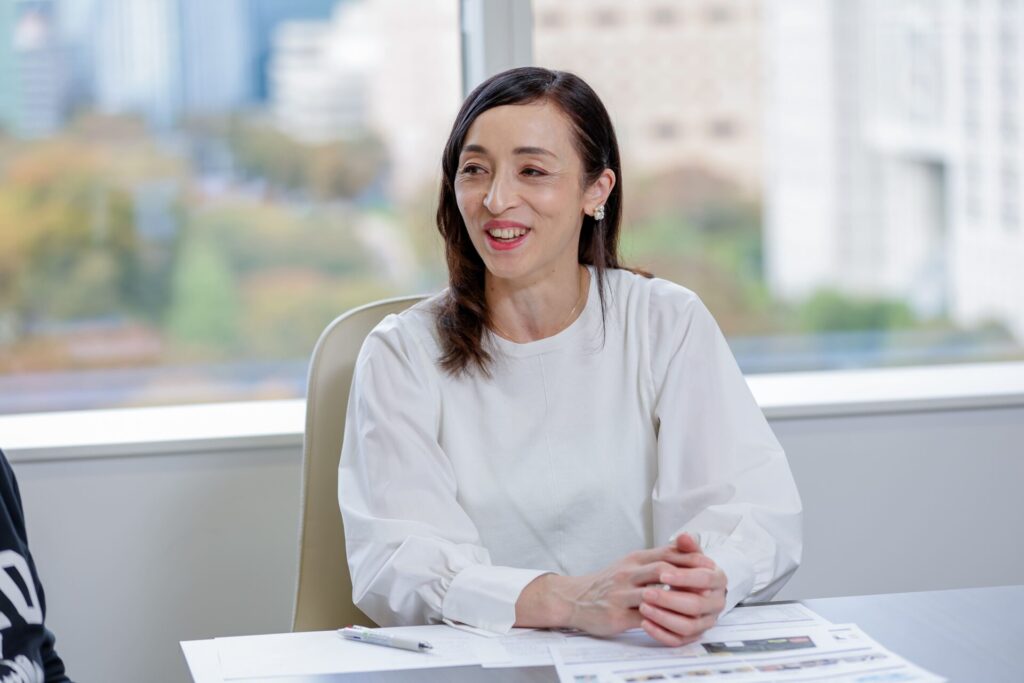
——Finally, from your respective positions, could you please share your vision for the future, especially looking ahead to the 20th anniversary event in 2027?
Nakamura: Since 2015, we have supported the Diamond Athlete Program as one of the grant recipients of the Sport Legacy Program, providing support to top athletes in a direct and tangible way. As we continue this support, I am aware that young athletes’ mindsets are changing. It makes me feel that perhaps we could—or should—evolve how the donations are utilized.
For example, we could build a program that provides athletes with opportunities to think about and actively engage in social contribution. I believe that when athletes ask themselves, “What kind of social contribution can we make?” and take action, it leads not only to improved athletic performance but also to their personal growth as human beings.
Murofushi: Because the athletes participating in the Diamond Athlete Program receive support from so many people, it is not uncommon for them to feel that they, too, want to be a force for good for someone else in the future. The hope that they will become people who hold that perspective is embedded in the program itself.
Regarding the development of athletes who can consider what they can do for society, I gained a lot of inspiration from our conversation today. I definitely want to incorporate these ideas into this year’s program. I feel it is increasingly important to nurture individuals who can communicate a message only they can deliver and who can take action—however small—to bring joy to others. You have given me some truly excellent hints and “takeaways” today.
The certified Diamond Athletes are still “diamonds in the rough” before their major international breakthroughs. However, I think they need to be more active in self-promotion, proactively communicating, “I can do this,” or “I can be useful in this situation.”
The JAAF will continue to enhance our programs to foster athletes who can contribute to society, and we sincerely ask for your warm, continued support.
*Learn more details on the Tokyo Marathon Foundation’s Sports Legacy Program, click here:
*Learn more details on the Japan Association of Athletics Federations’ Diamond Athlete Program, click here: