
Interview Relay
Stories — Connected Through the Tokyo Marathon
“A Method for Success Through the Science of Rest”— Finding the Answer Where Runners and VENEX Meet —

Interview Relay 2nd Run: Stories of “Connections Between People” Born Through the Tokyo Marathon.
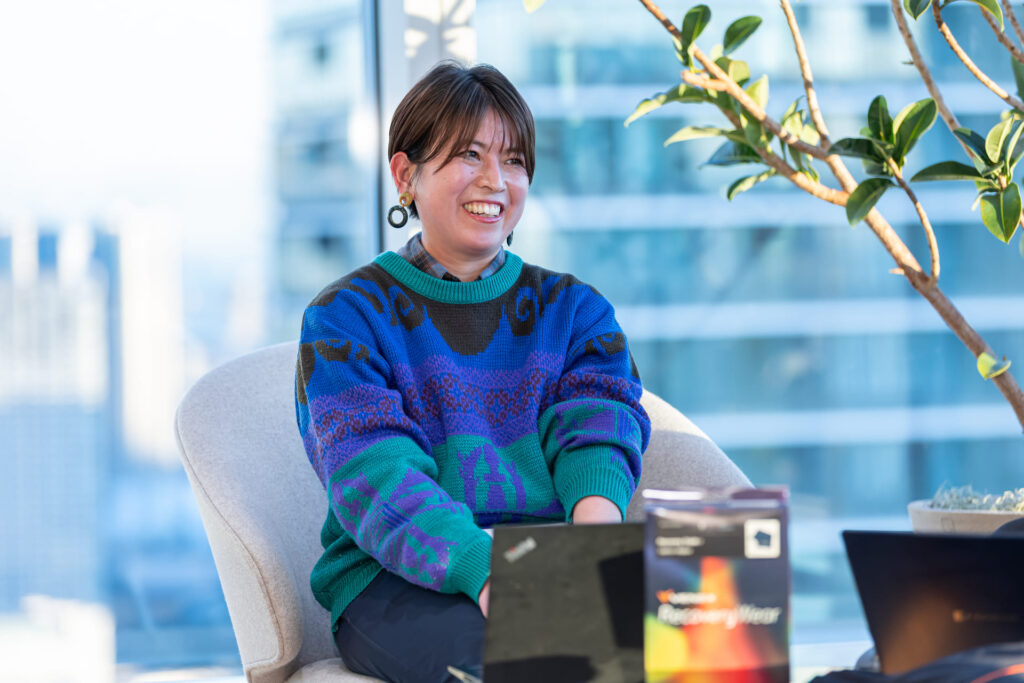
This time, we introduce a story of Tatsunori Nakamura, Sales Director at VENEX Co., Ltd. (“VENEX”), and Yumi Wakabayashi, a writer who’s always tapping into the runner’s perspective for various running media.
VENEX, an Official Partner since the Tokyo Marathon 2026, is a company dedicated to promoting the importance of “rest.” They do this through the development, manufacturing, and sales of recovery products, including their signature recovery wear. On the other side of the story, Ms. Wakabayashi learned the hard way—through exhaustion from over-training—just how crucial that rest truly is.
Why is recovery so essential? How does proactive rest transform mental and physical performance? What is the ideal balance between training and recovery for a runner? We asked Mr. Nakamura and Ms. Wakabayashi to share their insights and the story of their connection.
Discovering Running Led to Independence—It Truly Changed My Life!
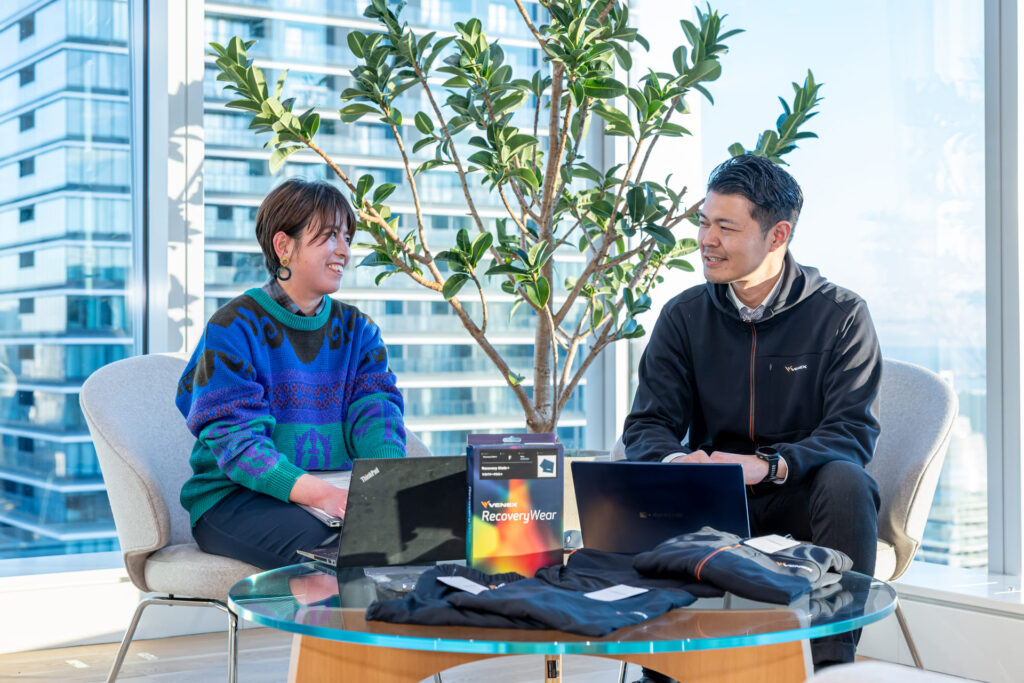
—Could you please introduce yourselves and tell us how you first got into running?
Nakamura: Initially, I worked as a buyer and was responsible for sourcing VENEX products. At the time, there were hardly any products focused on “recovery,” and I found the concept so fascinating that I decided to join the company. I’ve been here for eight years now, and as the Head of Sales, I oversee both our physical stores and e-commerce.
My journey with running started when I took part in “Hood to Coast” in Oregon in the United States—a relay race covering about 200 miles from the mountains to the coast. We formed a team through a sports community, where each member had to run three separate sections. I had almost no running experience at the time, so I was quite nervous, but once I finished, I was filled with a strong sense of accomplishment. From that moment on, I was hooked.
Wakabayashi: I started running in 2018. It all began when a female trainer at the gym I was attending invited me to a race. I had never run before, but since I’d been working out a bit and it was a 10km race just for women, I figured, “Why not?” and gave it a go. That was in March.
A female coach I met at a training session hosted by the race sponsor told me, “Running will change your life,” and those words have stuck with me ever since. And she was right—it really did. I fell deeper and deeper into the joy of it. I used to do work that had nothing to do with running, but after I started, I felt this strong urge to write about it. Now, I’m working as a freelance writer specializing in running. My career, the people I meet—everything has completely changed.
—What are your impressions of the Tokyo Marathon?
Nakamura: I actually ran the race in 2018, and what stuck with me the most was the sheer energy of the crowds. Compared to other races, the level of excitement was on a completely different scale—it was incredible. I was also deeply moved by the volunteers’ warmth.
In most marathons, there’s usually a point where you end up having to walk. But at the Tokyo Marathon, I was able to turn the incredible energy and cheers from the sidelines into my own strength. It made me feel like I’d become a pro athlete (laughs). I managed to finish without walking a single step and even set a new personal best. I’ll be running again this year, so my expectations and excitement are higher than ever.
Wakabayashi: This year will finally be my long-awaited first time running the race! Until last year, I was always out there beyond the 30 km mark, cheering on the runners. When I’d shout “Go for it!” to my friends, I’d see them suddenly come back to life, even if they had been completely exhausted just a moment before.
Knowing exactly what they’ve gone through and the stories behind their journey to the start line, I’d sometimes find myself moved to tears just watching them. Even as a spectator, you feel this deep sense of being “one” with the runners. It truly is a special event.
Exhausted from 350km Months: How Recovery Wear Improved Fatigue and Sleep Quality
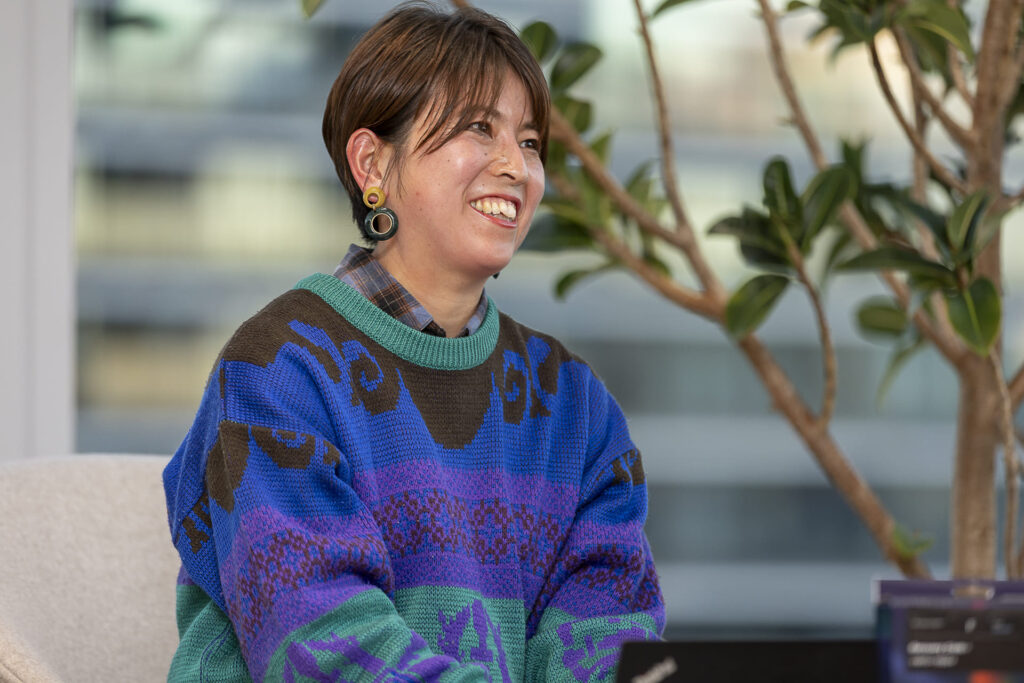
—Ms. Wakabayashi, how did you first come across VENEX products?
Wakabayashi: I used to put training above everything else and barely thought about self-care. At first, the most I did was apply VENEX recovery cream to my legs after a hard workout.
But there was a time when the fatigue just wouldn’t leave my body, and it led to a major wake-up call. At the time, I was running about 350 km per month while being incredibly busy with work. I went into a race thinking, “I’ve trained so hard, I’m bound to set a record,” but I ended up with my worst time ever. It was a huge shock, but it made me realize, “My approach is wrong. I have to change.” That’s when I started looking seriously into recovery
Nakamura: It sounds like you were dealing with some deep-seated fatigue. Health is built on three pillars: Exercise, Nutrition, and Rest. There are entire fields of study for “Exercise” and “Nutrition,” and plenty of chances to learn about them, so people tend to get why they matter. On the other hand, we rarely get the chance to study “Rest”. Most people just think of it as “sleeping.”
In the “Fitness-Fatigue Model,” performance is defined as “Performance = Fitness- Fatigue.” No matter how much fitness you build, if you keep piling up fatigue, your performance will not improve. I think that’s exactly where you were. Facing the need for recovery and turning to VENEX was a great realization.
—Did you notice any changes in your body after you started using recovery wear?
Wakabayashi: I’ve been wearing it for about a year now, and the first thing I noticed was a clear improvement in my sleep quality. I’d always felt I needed to fix my sleep habits, so I’d try to get into bed early, but my irregular schedule made it hard to drift off. I’d end up scrolling on my phone and finally pass out around 2:00 AM. Since I started wearing recovery wear, however, I’m able to fully relax and fall into a deep sleep almost instantly.
Also, I travel a lot for races and work. When I wear VENEX tights* during those trips, my legs don’t get as tired, and I feel like my performance stays consistent. It’s a total “runner thing” to head home after a race still carrying all that exhaustion, but wearing them during travel time—or any “gap time”—makes me feel like I’m efficiently recharging my batteries.
*Recharge+ Long Tights [Class I Medical Device]
Rest is More Than Just Sleep—Finding the Right Recovery for You
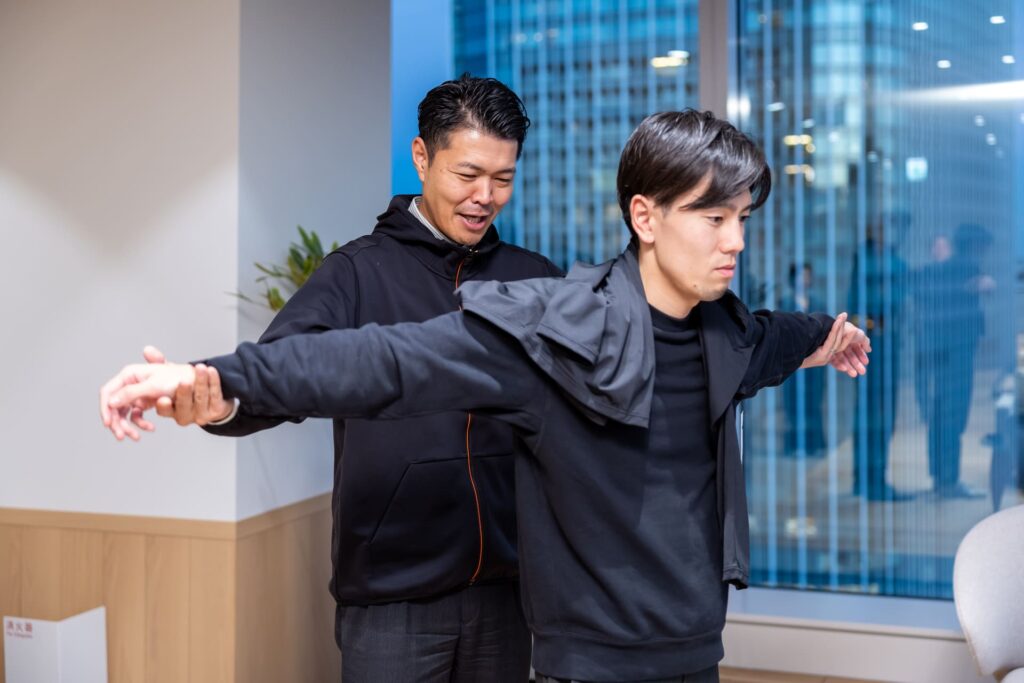
Scene from the event held in Asakusa at the time of the Tokyo Marathon 2013
—Since realizing the importance of recovery, has your approach to running changed?
Wakabayashi: Yes, completely. I used to run every day until I was injured and told by a physician to stop. Now, I’ve built a habit of “running, then resting.” I don’t run every day anymore. Instead, I incorporate yoga and light exercise to create a cycle that doesn’t put too much strain on my body and mind.
Nakamura: When you’re feeling fatigued but keep pushing yourself to train, your performance tends to decline. That’s why taking proper rest is so vital. In this day and age, you have to be intentional about “going out and getting” your recovery. At VENEX, our philosophy is that “rest is not just about sleep.” The opposite of “fatigue” is “vitality,” and nurturing that vitality is what truly recharges your body.
Beyond sleep, the yoga that Ms. Wakabayashi practices is also a wonderful form of recovery. Just as you plan your training schedule, you should also focus on your recovery time. By balancing the two, you’ll improve your performance and prevent fatigue from building up.
—So, sleeping all day just because you’re tired isn’t necessarily the best way to rest?
Nakamura: Sleep is vital, but it’s only one method of recovery. We develop our products based on the “science of rest,” which identifies seven different types of rest. For example, there is “Transformative Rest.” This involves changing your environment—such as traveling, shopping, redecorating, or even decluttering (Danshari)—to refresh your mind and body.
It is important to incorporate all seven types, including “Active Rest” (exercise-based) and “Recreational Rest,” into your daily life. I want people to create their own recovery programs and follow them just as they would a training menu. For some, even cleaning their surroundings can lead to relaxation. It’s crucial to understand which actions best recharge your own mind and body and to consciously set aside time for them.
Wakabayashi: I love the idea of tailoring recovery to yourself. When you have a training menu, you tend to get anxious about “having to get it done.” But I’ve realized that listening to your body and choosing what you need in the moment is the real key to balancing training and rest. Since I started resting properly, my overall physical condition is much better.
Letting the Tokyo Marathon Be Your Gateway to the Power of Rest
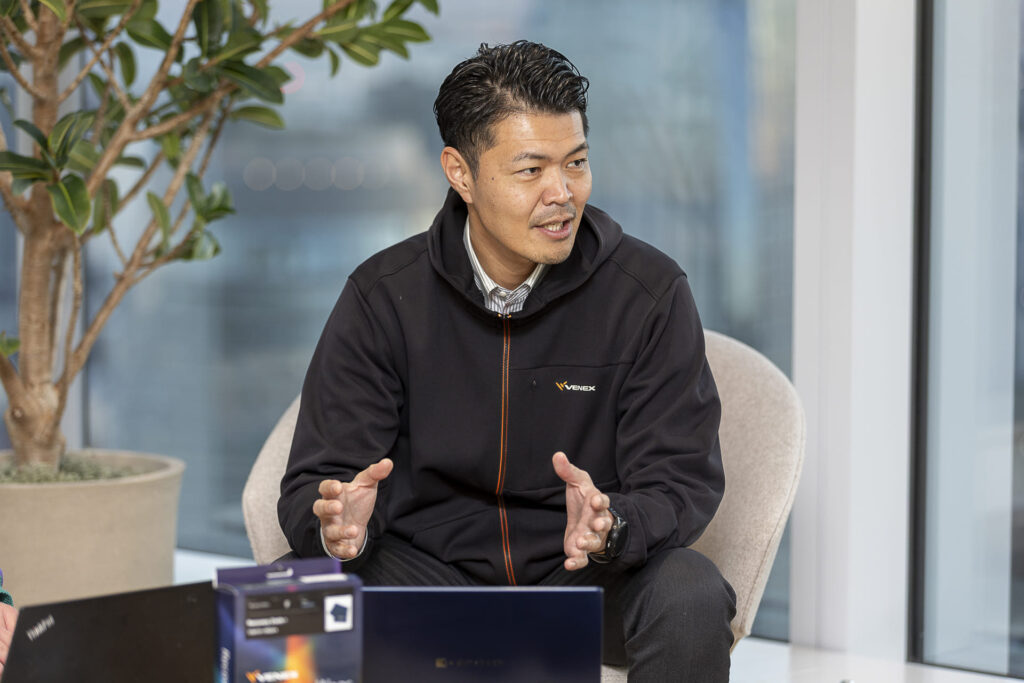
On-the-go recovery with “Recovery Move.” (Worn by Mr. Nakamura)
—Moving forward, who would you like to introduce VENEX products to?
Nakamura: I especially want people who are giving their all to something to experience how much their performance can transform through proper rest. Lately, understanding of the importance of recovery has been deepening, and I’m so pleased to see more people choosing our products as gifts for loved ones who work or exercise hard. I also hope that anyone feeling like they “can’t sleep” or “can’t shake their fatigue” will use recovery wear as an easy way to incorporate rest into their lives.
For example, we know that traveling by Shinkansen or plane causes significant fatigue. At VENEX, we have a series called “Recovery Move” specifically designed for use during travel. I want runners to use these to support their recovery while on the move, so they can stay in peak condition and perform at their absolute best.
Wakabayashi: You know, my smartwatch used to send me stress alerts all the time when I was on the Shinkansen. But now that I think about it, since I started wearing VENEX during my travels, those alerts have stopped. Now it all makes sense!
—As an Official Partner of the Tokyo Marathon, what message do you want to share with the runners?
Nakamura: Our vision is to “Energize people all over the world.” Since recovery wear originally gained traction in the sports world, we really want to reach all the dedicated runners out there.
Through the Tokyo Marathon, we want to promote the vital importance of rest based on the “science of rest.” We hope the event offers people an opportunity to experience the benefits of recovery wear and discover the best ways to maximize their own vitality.
—And Ms. Wakabayashi, for your long-awaited first Tokyo Marathon, what are your goals for the 2026 race?
Wakabayashi: I’m aiming for a personal best, so my target is a sub-3.5 finish. But what I really want to focus on this year is “enjoying the challenge.” Looking back, I’ve always performed better when I was relaxed. I believe great results follow when your mind, body, training, and rest are all in balance—when you’re truly healthy. Instead of just pushing myself blindly, I want to run with a smile on my face.
Nakamura: That’s fantastic. With that mindset, I’m sure that personal best is within reach.
“The Day We Unite.” Why a Race Where Everyone is Different is So Special.
—The Tokyo Marathon will mark its 20th anniversary in 2027. Finally, what are your hopes for that milestone event?
Wakabayashi: Tokyo is the very heart of my running life. Having a community to run with here has enriched my experiences and truly changed my life. That’s why a race held right here in Tokyo is so special to me. From elite athletes to city runners, everyone has their own way of enjoying it. Including spectators and volunteers, it is truly “The Day We Unite.”
Even though we all have differences—whether in nationality, race, or gender—I hope the marathon continues to be a place where everyone can be themselves. A place where we all respect and embrace those differences while sharing the joy of running together.
Nakamura: On our end, we want to continue supporting runners through the lens of recovery. Leading up to this major milestone, we hope to create even more opportunities to share the importance of rest. My goal is to see more runners out there like you, Ms. Wakabayashi—crossing the finish line with a genuine smile.